Six rounds in and your grip is gone. You're not sore the way a lifter is sore — you're wrung out, your forearms won't close, and there's class again tomorrow night. That's the real problem BJJ recovery supplements are being asked to solve: not one brutal session, but five or six a week, stacked on top of each other for years.
The honest answer up front: there is no grappling-specific supplement aisle, and nothing you can buy recovers you faster than food and sleep do. But two supplements earn a permanent spot in a grappler's routine on the strength of the research, one earns a conditional spot, and several of the most-marketed ones don't earn any. Here's how we sort them after fifty years of coaching people through hard training blocks.
What Grappling Actually Does to Your Body
Jiu-jitsu is an intermittent sport — short bursts of maximal effort woven through longer stretches of grinding positional work. A systematic review in Sports Medicine - Open pooled 58 studies covering 1,496 BJJ athletes and found a demand profile dominated by isometric strength and grip endurance rather than raw power. In gi-grip testing, practitioners held static hangs for roughly 28 to 63 seconds and managed 7 to 18 dynamic repetitions, with handgrip strength across the reviewed groups landing between 38 and 57 kgf.
The competition math is the part that matters for recovery. That same review notes an athlete has to win four to six matches in a single day to take a title in the sport's major events — more if they enter the open class. Add a normal training week of four to six sessions and the picture is clear: grappling isn't a sport where you recover fully between efforts. You recover partially, then go again. That cumulative load, not any single session, is what your nutrition has to cover.

The BJJ Recovery Supplements That Actually Have Evidence
Start with protein, because nothing else works without it. The International Society of Sports Nutrition's position stand puts the daily target for people training hard at 1.4 to 2.0 grams per kilogram of body weight, with 20 to 40 grams per meal — or roughly 0.25 g/kg — to maximally stimulate muscle protein synthesis. That same stand is blunt that whole protein sources outperform isolated amino acids, which is worth remembering when you're standing in front of a shelf.
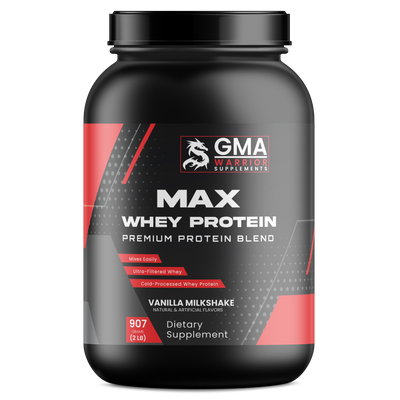
For a 175-pound grappler, that's about 110 to 160 grams a day. Most people we coach are under that number, not over it, and the fix is usually one more protein-dense meal rather than a new tub. A powder is convenience, not magic. For the full breakdown, see our guides to how much protein you really need and protein powder for muscle recovery, or compare the whey and plant options in our premium sports nutrition collection.

Creatine: The Most Reliable Thing in Your Gym Bag
Creatine is the best-supported supplement for exactly what grappling asks of you — repeated high-intensity efforts taken with incomplete rest. The ISSN's creatine position stand calls monohydrate the most effective nutritional ergogenic available for increasing high-intensity exercise capacity and lean body mass, and reports it safe and well tolerated in healthy people at intakes up to 30 grams a day for five years.
Dosing is refreshingly boring: 3 to 5 grams a day, every day, whenever suits you. You can front-load at 0.3 g/kg per day for five to seven days to saturate faster, or skip that and arrive at the same place in a few weeks — we walk through the trade-off in our guide to the creatine loading phase. Bigger athletes training at high volume may need 5 to 10 grams daily to hold their stores. One note for competitors: creatine draws water into muscle, which typically shows up as a pound or two on the scale. If you compete by weight class, start it well outside a weigh-in window and work the rest out with your coach.
GMA Warrior Creatine Powder — plain creatine monohydrate, no proprietary blend and no sugar, so the 3-to-5-gram daily dose on your scoop is the same dose the research used.
Shop Warrior Creatine Powder →Omega-3s and Joint Support: Real, but Smaller Than the Label Suggests
Here's where honesty costs us something, because we sell both of these. Omega-3s do reduce muscle soreness after damaging exercise: a meta-analysis of 12 randomized trials (145 supplemented participants, 156 controls) found soreness scores two days out dropped significantly, by a mean of 0.93 points on a 10-point scale (95% CI −1.44 to −0.42, P = 0.0004). The same authors then note the effect sat below the 1.4-point difference researchers treat as clinically meaningful. Translation: real, measurable, and probably smaller than you'd notice on a Tuesday.
So take fish oil for the reasons it's best evidenced — general and cardiovascular health support over the long run — and treat easier soreness as a bonus rather than the purchase. The same restraint applies to joints. Grappling is hard on fingers, elbows and knees, and curcumin has its own research base, which we cover in our guide to turmeric for joint pain; our Max Turmeric Joint Support pairs it with boswellia, ginger and glucosamine for that kind of daily joint-comfort support. What no supplement does is fix a joint that's actually hurt. Pain that persists, swelling, instability, or anything that changes how a joint moves belongs in front of a healthcare provider, not behind a capsule.

What Actually Moves the Needle
Two things we'd skip. BCAAs are the classic grappler's purchase, and if you're already hitting your protein target, the research doesn't support buying them separately — those amino acids are already in your food, attached to everything else your body needs. We laid the comparison out in BCAA vs protein powder. The second skip is any "recovery blend" hiding behind a proprietary formula: if the label won't tell you how many milligrams of each ingredient you're getting, you can't tell whether it matches a dose anyone ever studied.
What's left is unglamorous and free. Sleep is where the repair actually happens. Eating enough — carbohydrate around hard sessions especially — is what lets you train at intensity again twenty-four hours later. And managing your mat time honestly, knowing which rounds are hard rounds and which nights to leave the ego in the car, is the biggest lever of all. That's what we teach in our Brazilian Jiu Jitsu program at Global Martial Arts USA: the training age you build over decades comes from the sessions you recovered from, not the ones you survived.
Building a stack from zero? Protein first, creatine second, fish oil third, and everything else only once it earns a place. Our fighter's guide to supplements for muscle recovery goes deeper on each one. And nothing here is medical advice — if you're pregnant or nursing, under 18, taking medication, or managing a health condition, talk with your healthcare provider before starting any supplement.
Sources & Research
- Andreato LV, Díaz Lara FJ, Andrade A, Branco BHM. Physical and Physiological Profiles of Brazilian Jiu-Jitsu Athletes: a Systematic Review. Sports Medicine - Open, 2017;3:9. ncbi.nlm.nih.gov
- Jäger R, et al. International Society of Sports Nutrition Position Stand: protein and exercise. Journal of the International Society of Sports Nutrition, 2017;14:20. jissn.biomedcentral.com
- Kreider RB, et al. International Society of Sports Nutrition position stand: safety and efficacy of creatine supplementation in exercise, sport, and medicine. Journal of the International Society of Sports Nutrition, 2017;14:18. jissn.biomedcentral.com
- Lv Z, Zhang JM, Zhu WT. Omega-3 Polyunsaturated Fatty Acid Supplementation for Reducing Muscle Soreness after Eccentric Exercise: A Systematic Review and Meta-Analysis of Randomized Controlled Trials. BioMed Research International, 2020;2020:8062017. ncbi.nlm.nih.gov