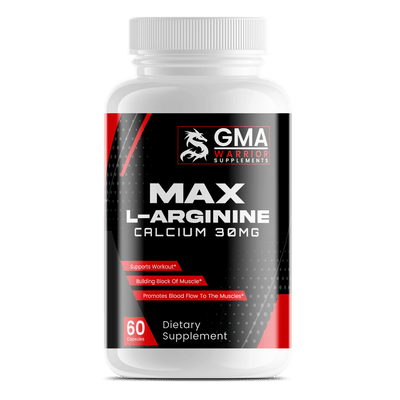
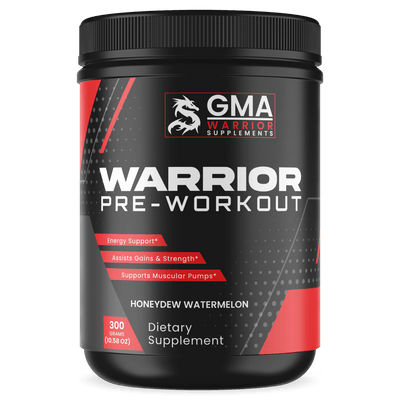
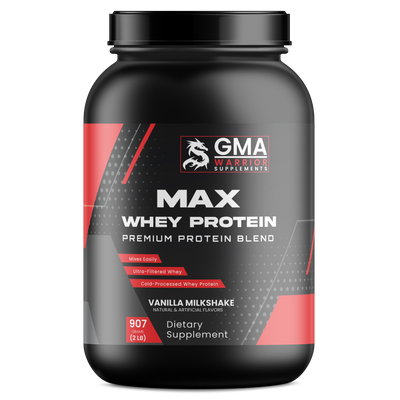
Walk down any supplement aisle and you'll find two tubs sitting side by side, both promising muscle and recovery. The BCAA vs protein powder question is one of the most common ones we get from students at our academy, usually phrased as "which one should I be taking?" The honest answer is that they were never really competitors. One is complete building material. The other is three parts pulled out of that material and sold separately.
Understanding that difference tells you exactly when each one is worth your money — and when you're paying twice for something you already have.
BCAA vs Protein: What's Actually in Each Tub
A scoop of whey protein delivers roughly 20 to 25 grams of complete protein — all nine essential amino acids your body can't manufacture on its own, in the ratios it needs to actually assemble new muscle tissue. Included in that scoop are about 5 to 6 grams of branched-chain amino acids: leucine, isoleucine, and valine.
A scoop of BCAA powder delivers those same three amino acids — typically 5 grams in a 2:1:1 leucine-heavy ratio, often with glutamine and vitamin B6 alongside — and nothing else. No histidine, no lysine, no methionine, no tryptophan.
That's the whole story in one sentence: BCAAs are already inside your protein powder. Buying both isn't choosing between two products. It's buying a complete set of tools, then buying three of those same tools again in a separate box because they came in a nicer flavor. Whether that second purchase makes sense depends entirely on what you're using it for, which is what the rest of this guide covers. Both live in our premium sports nutrition lineup, and they do genuinely different jobs.

What the Research Says About BCAAs and Muscle Growth
This is where the marketing and the data part ways. Leucine is the amino acid that flips the muscle-building switch, so the logic behind BCAA supplements sounds airtight: take the switch-flipper directly, skip the calories, grow.
Jackman and colleagues tested exactly that at the University of Birmingham in 2017, giving trained men 5.6 grams of BCAAs after resistance exercise and measuring muscle protein synthesis directly. It worked — myofibrillar protein synthesis ran 22% higher than placebo. Real, measurable, statistically solid. But the researchers noted that this response was roughly half of what studies report when the same leucine dose arrives packaged inside whole whey protein.
The reason is simple construction logic. Leucine can signal "start building," but your body cannot build muscle protein from three amino acids any more than a framer can build a wall from studs alone. The other six essential amino acids have to come from somewhere. If they aren't in your drink, the body pulls them from breaking down existing tissue — which caps how much you can actually gain.
Robert Wolfe reviewed the full body of human evidence for the Journal of the International Society of Sports Nutrition that same year and landed somewhere blunter: the claim that dietary BCAAs alone produce an anabolic response in humans, he concluded, is unwarranted. If your daily protein intake is already where it should be, adding BCAAs on top adds very little to muscle growth.
GMA Warrior Max Whey Protein Vanilla Milkshake — a complete whey concentrate and isolate blend that covers all nine essential amino acids, so the BCAAs you're paying for arrive with everything else your body needs to use them.
Shop Max Whey Protein →Where BCAAs Actually Earn Their Place
None of that makes BCAAs useless. It makes them a different tool than most labels suggest — and the soreness research is where they hold up best.
A 2024 systematic review and meta-analysis in Sports Medicine - Open pooled 18 randomized controlled trials covering 331 participants and found that BCAA supplementation meaningfully reduced delayed-onset muscle soreness at 24, 48, 72, and 96 hours after muscle-damaging exercise, with large effect sizes across all four windows. There was no effect immediately post-session, and the creatine kinase results were mixed. The meta-regression also found something most people get wrong: the biggest benefits came from higher daily doses taken consistently over longer periods — trials that pre-loaded for more than seven days outperformed the rest. One panic scoop after a brutal session isn't the protocol that produced these results.
Beyond soreness, BCAAs solve practical problems a protein shake can't. They sit light enough to sip through a two-hour session when a full shake would sit in your stomach like a brick. They cost you almost nothing in calories, which matters when you're cutting to make weight. And if you train early and fasted, they give you something in the tank without breaking the fast the way a full meal would.
That's the honest positioning: a comfort and convenience tool for hard, long, or depleted training — not a growth tool. We went deeper on this in our guide to BCAA benefits, including the one situation where they're genuinely a waste of money. If sipping through long sessions is your use case, our BCAA Lemon Lime runs a 2:1:1 ratio with added glutamine and B6.

Hit Your Daily Protein Target First
Before either tub matters, the number on your daily total does. The International Society of Sports Nutrition's position stand on protein and exercise puts the range for building or maintaining muscle at 1.4 to 2.0 grams per kilogram of body weight per day, spread across meals at roughly 0.25 g/kg — or 20 to 40 grams — per sitting, with each dose carrying 700 to 3,000 mg of leucine alongside a full spread of the essential amino acids.
For a 180-pound athlete, that's about 115 to 165 grams a day. Most people who feel like their recovery has stalled are sitting well under that, and no amount of amino acid powder fixes a protein deficit.
Food comes first — chicken, eggs, fish, beef, dairy, beans. Powder exists to close the gap on days when training runs long and cooking doesn't happen. If you're not sure where your number should land, our guide on how much protein you really need walks through it by body weight and training load, and our protein powder for muscle recovery guide covers timing.

So Which One Should You Buy?
If you can only buy one, buy protein. It covers the BCAA bases and everything else, and it's the purchase that moves the needle on the daily total that actually drives recovery.
Add BCAAs when you have a specific reason: you're sipping through long sessions and want something that won't sit heavy, you're training fasted, or you're cutting weight and every calorie is spoken for. If you're taking them for soreness, take them consistently for weeks rather than reaching for a scoop only after the session that wrecked you.
What neither tub does is replace the work. In fifty-plus years of coaching at our martial arts academy, the students who recover best have never been the ones with the fullest supplement shelf. They're the ones who eat enough, sleep enough, and show up. Supplements support that. They don't substitute for it.
One last note: if you're managing a health condition, taking medication, pregnant or nursing, or have any concerns about your kidneys or protein intake, talk with your healthcare provider before adding either powder to your routine.
Sources & Research
- Jackman, S. R., Witard, O. C., Philp, A., Wallis, G. A., Baar, K., & Tipton, K. D. "Branched-Chain Amino Acid Ingestion Stimulates Muscle Myofibrillar Protein Synthesis following Resistance Exercise in Humans." Frontiers in Physiology, 8:390, 2017. pubmed.ncbi.nlm.nih.gov
- Wolfe, R. R. "Branched-chain amino acids and muscle protein synthesis in humans: myth or reality?" Journal of the International Society of Sports Nutrition, 14:30, 2017. pubmed.ncbi.nlm.nih.gov
- Salem, A., et al. "Attenuating Muscle Damage Biomarkers and Muscle Soreness After an Exercise-Induced Muscle Damage with Branched-Chain Amino Acid (BCAA) Supplementation: A Systematic Review and Meta-analysis with Meta-regression." Sports Medicine - Open, 10:42, 2024. pmc.ncbi.nlm.nih.gov
- Jäger, R., Kerksick, C. M., Campbell, B. I., et al. "International Society of Sports Nutrition Position Stand: protein and exercise." Journal of the International Society of Sports Nutrition, 14:20, 2017. pmc.ncbi.nlm.nih.gov