A detox supplement makes one promise: that something inside you needs flushing out, and that a capsule, a tea or a two-week kit will do it. The 2015 review that went looking for the evidence could not find a single randomized controlled trial of a commercial detox program in humans. Meanwhile the ingredients that fill those bottles — green tea extract and garcinia cambogia above all — sit near the top of the list of supplements hepatologists see causing the very liver damage the label claims to undo. Here is what the research supports, what your liver and kidneys already do for free, and an honest read on our own catalog.
What your body already does without a detox supplement
The word "toxin" does a lot of work in detox marketing and is almost never defined. Ask which compound the product removes, by what route, and how anyone measured it, and the conversation ends. Your body runs a clearance system around the clock: the liver chemically modifies compounds so they can be excreted, the kidneys filter them into urine, the gut carries out whatever the liver dumps into bile. None of it needs switching on; if any of those organs actually stopped, you would be in a hospital, not a supplement aisle. The honest version of "supporting detox" is keeping that machinery supplied — water, fiber, protein, sleep, and not drowning it in alcohol. A capsule is an upgrade sold to a system that already runs at full capacity on groceries.
What the detox supplement research actually shows
Klein and Kiat's 2015 critical review in the Journal of Human Nutrition and Dietetics is still the reference paper. A handful of small studies claimed commercial detox programs enhanced liver detoxification or cleared persistent pollutants, but they were hampered by flawed methods and tiny samples — and to the authors' knowledge no randomized controlled trial had ever tested a commercial detox program in humans. The National Center for Complementary and Integrative Health puts it plainly: no compelling research supports detox diets for weight management or eliminating toxins, and there are no studies of long-term effects at all.
The weight loss people report is real and short-lived. NCCIH cites a 2017 review finding that juice and detox regimens work by driving calorie intake very low for a few days, with the weight returning once normal eating resumes. What a laxative-heavy kit produces in week one is water and stool leaving your body, not fat — and NCCIH is blunt about the cost: diarrhea, dehydration, malabsorption, and dangerous electrolyte imbalances after days of liquids without food. The FDA and FTC have acted against multiple cleanse sellers for hidden ingredients and false disease-treatment claims.

The ingredients in the bottle — and the liver-injury list
This is what turns a "waste of money" story into a safety story. The U.S. Drug-Induced Liver Injury Network has tracked hepatotoxicity cases since 2004; in its 2014 report, the share of cases attributed to herbal and dietary supplements rose from 7% to 20% over the decade, and injury from non-bodybuilding supplements led to death or transplant more often than injury from prescription drugs — 13% versus 3%. A 2025 review from the same group names the major implicated agents: anabolic steroids, green tea extract, garcinia cambogia, kratom, ashwagandha, turmeric, and multi-ingredient formulas. Read a few cleanse labels and you will find most of that list.
Green tea extract is the clearest case because the U.S. Pharmacopeia spent five years reviewing it. Published injury reports cluster at EGCG intakes from 140 mg to roughly 1,000 mg a day, with wide individual variation, and taking concentrated extract fasted significantly raises how much your body absorbs. USP's response was a cautionary label: take with food, do not use if you have a liver problem, and stop and see a practitioner if you develop abdominal pain, dark urine or yellowing skin. Nor is this niche — a 2024 national survey analysis estimated 15.6 million U.S. adults had used one of six potentially hepatotoxic botanicals in the previous 30 days, about as many as were taking NSAIDs.
The category's other pillar, milk thistle, has the opposite problem: it appears safe and it does not appear to do much. The Cochrane review of 18 randomized trials in 1,088 patients with liver disease found no significant effect on mortality, complications or liver tissue, and only 28.6% of the trials were high quality. A "liver support" claim built on milk thistle rests on evidence Cochrane called into question.
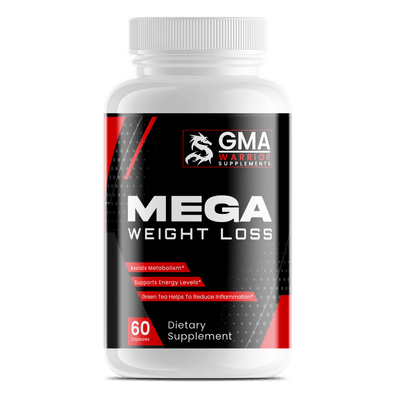
GMA Warrior Mega Weight Loss — straight answer first: we do not make a detox product, and we are not going to rename a thermogenic to sell you one. This is a weight-management formula built on green coffee bean, green tea, garcinia cambogia, raspberry ketone and caffeine. Two of those — green tea and garcinia — are on the liver-injury list above, so read it with that in mind: the label prints 130 mg of green tea, below the lowest published injury report, and the USP guidance still applies. Take it with food, never stack it with another green tea or garcinia product, and stop and talk to your healthcare provider if you notice abdominal pain, dark urine or yellowing skin.
Shop Mega Weight Loss →
How to read a detox supplement label
Four checks. First, look for laxative and diuretic herbs — if the deck is built around anything that moves your bowels or makes you urinate, the "results" are lost water, and the diarrhea NCCIH warns about is the mechanism, not a side effect. Second, find the milligram amounts: green tea extract with no EGCG figure leaves you no way to know whether you are at 50 mg or 500 mg, the whole difference between a cup of tea and a case report. Third, any concentrated green tea extract that tells you to take it fasted is ignoring the USP label. Fourth, count the ingredients; the 2025 DILIN review named multi-ingredient formulas as a category of their own because when a 30-ingredient blend injures someone, nobody can say which ingredient did it.
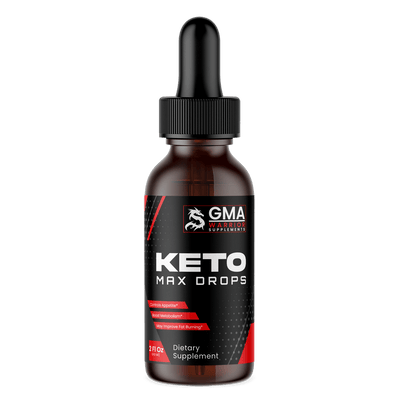
Our own GMA Keto Max Drops fails the second check: sixteen ingredients including garcinia cambogia and EGCG, with no milligram amounts printed on the page — the supplement facts panel is the only place to find the dose. Hold everything in the weight loss and detox collection to that standard, ours included.
What actually supports your body's own clearance
We have coached adults for more than fifty years, and detox products follow the pattern of every shortcut: the people buying them are usually skipping the cheap inputs that would do more. Water is the kidney's working fluid — drink enough that your urine stays pale. Fiber is what the gut uses to carry bile and its cargo out, and a scoop of powder is not a substitute, as we covered in greens powder benefits. Alcohol is the one common "toxin" that measurably loads the liver, and cutting it back does more for that organ than any capsule.
Then there is sweat. "Sweating out toxins" is the category's most repeated line, and sweat is overwhelmingly water and salt; the value of a hard session is what it does to your metabolism, sleep and appetite, not what leaks out of your skin. If you want that input, our adult class schedule is where to start. If a bottle is still on your list, buy it for a claim with trials behind it — our honest guides to fat burner supplements and apple cider vinegar benefits cover evidence that is smaller than the marketing but larger than the evidence for a detox supplement, which is none. And since turmeric sits on the same liver-injury list as green tea, our guide to turmeric side effects covers the high-absorption formulations behind those reports.

Sources & Research
- Klein AV, Kiat H. "Detox diets for toxin elimination and weight management: a critical review of the evidence." Journal of Human Nutrition and Dietetics, 2015;28(6):675–86. pubmed.ncbi.nlm.nih.gov
- National Center for Complementary and Integrative Health (NIH). "'Detoxes' and 'Cleanses': What You Need To Know." nccih.nih.gov
- Navarro VJ, Barnhart H, Bonkovsky HL, et al. "Liver injury from herbals and dietary supplements in the U.S. Drug-Induced Liver Injury Network." Hepatology, 2014;60(4):1399–408. pmc.ncbi.nlm.nih.gov
- Halegoua-DeMarzio D, Navarro V. "Challenges in herbal-induced liver injury identification and prevention." Liver International, 2025;45(3):e16071. pmc.ncbi.nlm.nih.gov
- Oketch-Rabah HA, Roe AL, Rider CV, et al. "United States Pharmacopeia (USP) comprehensive review of the hepatotoxicity of green tea extracts." Toxicology Reports, 2020;7:386–402. pmc.ncbi.nlm.nih.gov
- Likhitsup A, Chen VL, Fontana RJ. "Estimated Exposure to 6 Potentially Hepatotoxic Botanicals in US Adults." JAMA Network Open, 2024;7(8):e2425822. pmc.ncbi.nlm.nih.gov
- Rambaldi A, Jacobs BP, Gluud C. "Milk thistle for alcoholic and/or hepatitis B or C virus liver diseases." Cochrane Database of Systematic Reviews, 2007;(4):CD003620. pubmed.ncbi.nlm.nih.gov