Apple cider vinegar for weight loss is the rare supplement claim that actually has randomized trials behind it — and the rare one where the single biggest number in the literature was retracted in September 2025. If you have seen a headline promising eight kilograms in twelve weeks, that headline came from a study that no longer exists. What survives is smaller, slower, and a lot more honest. Here is what the trials actually measured, what the retraction changed, and where a bottle of vinegar realistically fits next to the work you are already doing.
What the research actually shows
The foundational trial is still the best-designed one. In 2009, researchers randomized 175 obese Japanese adults to drink 500 mL daily of a beverage containing 15 mL of vinegar, 30 mL of vinegar, or none at all, double-blind, for twelve weeks. Body weight, BMI, visceral fat area, waist circumference and serum triglycerides all came out lower in both vinegar groups than in placebo. The size of the win: roughly one to two kilograms of body weight, and about 0.4 to 0.7 of a BMI point.
Two things are worth knowing about that trial before you build a plan around it. The first is that the research was conducted at the Central Research Institute of the Mizkan Group Corporation — a vinegar manufacturer. That does not make the result wrong, but it is the kind of disclosure you deserve to see attached to the number. The second is the timeline: twelve weeks of daily dosing bought one to two kilograms. That is real, and it is nothing like what the internet promises.

The retraction that changed the numbers
In March 2024, a trial in Lebanese adolescents and young adults reported weight losses far larger than anything the earlier literature had produced, and it went everywhere. On 23 September 2025, BMJ retracted it. The stated reasons were not minor: the authors' analyses could not be replicated, the dataset showed patterns inconsistent with random allocation between groups, the p-values were improbably small for the number of participants enrolled, and the trial had never been prospectively registered.
Here is the part that matters for anyone reading a recent summary. A systematic review and meta-analysis of ten trials in 789 adults was accepted on 17 September 2025 — six days before the retraction — and the retracted study is one of its ten. That review is now the most-quoted source on this topic, and the eye-catching average it produced is being repeated in health coverage that has not caught up with the correction. Read any figure derived from that pooled average with that in mind.
The review is still useful, because its authors published a sensitivity analysis. When the five studies rated at high risk of bias were removed, the effect on body weight shrank from a standardized mean difference of −0.39 to −0.29, and the effect on waist circumference disappeared entirely — from significant at p = 0.04 to nothing at p = 0.16. Waist-to-hip ratio never separated from placebo at all. The honest summary of the whole field: a small, genuine effect on body weight and BMI, and no reliable evidence that vinegar targets your midsection specifically.
The dose, and what "modest" means in practice
Across the trials that tested apple cider vinegar for weight loss, 30 mL a day — two tablespoons — is where the effect showed up. The 5 to 15 mL subgroup did not reach significance for body weight. Both shorter runs of four to eight weeks and full twelve-week runs produced measurable change, so this is not something that needs a year to show up. It is something that produces a small result whether you give it two months or three.
Dilute it. Two tablespoons in at least eight ounces of water, ideally with a meal. Straight vinegar is a genuinely bad idea for your teeth: a 2022 laboratory analysis that soaked extracted human teeth in nine acidic beverages found vinegar and apple cider produced the greatest demineralization of anything tested. Use a straw if you drink it, and rinse with plain water afterward.

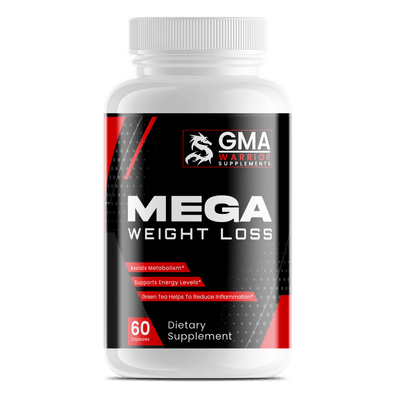
GMA Warrior Mega Weight Loss — straight answer first: we do not make an apple cider vinegar supplement, and nothing in our catalog contains ACV. This is a thermogenic built on green coffee bean, green tea, garcinia cambogia, raspberry ketone and caffeine — a different mechanism aimed at the same goal. Green tea is the only ingredient with a milligram amount printed on the page (130 mg), so read the supplement facts panel before you assume anything else is dosed where the research put it.
Shop Mega Weight Loss →Who should be careful
Vinegar slows gastric emptying — that is the leading explanation for why it blunts a post-meal glucose spike and why people report feeling fuller. For most people that is the point. For some it is a problem. A crossover study in ten patients with type 1 diabetes and existing gastroparesis found that 30 mL of apple cider vinegar slowed already-delayed stomach emptying further, and the authors flagged it as a possible disadvantage for glycemic control in that group.
If you take insulin or any glucose-lowering medication, a diuretic, digoxin, or anything that affects potassium, talk to your healthcare provider before making daily vinegar a habit. The same goes for anyone with reflux, gastroparesis, or chronic kidney disease. The largest safety review to date concluded that risk at recommended amounts appears inconsiderable — while also concluding that the quality of the underlying evidence is insufficient for definitive claims either way. Both halves of that sentence are true and you should carry both.
Where apple cider vinegar for weight loss actually fits
We have been coaching adults for more than fifty years, and the pattern does not change: the people who lean hardest on a supplement are usually the ones with the most room left in the basics. One to two kilograms over three months is what disciplined vinegar use bought in the cleanest trial available. A protein target you hit every day, four honest training sessions a week, and seven hours of sleep move considerably more than that — which is the same conclusion we reached in our guide to fat burner supplements. If you are looking for a place to start that work, our adult class schedule is a reasonable one.
So use vinegar the way it earns its keep: as food. Two tablespoons whisked into olive oil is a vinaigrette that makes vegetables worth eating, and that habit compounds better than the capsule version ever will. For the wider picture beyond weight — blood sugar, cholesterol, and the claims that do not hold up — read our companion guide to apple cider vinegar benefits, and browse the rest of the weight loss and detox range if you want support alongside the work. If a thermogenic is what you are actually after, GMA Max Burn is the liquid option in that collection — L-carnitine, African mango and green tea rather than vinegar, and like most of the category it prints no milligram amounts, so check the panel.

Sources & Research
- Castagna A, Ferro Y, Noto FR, et al. "Effect of Apple Cider Vinegar Intake on Body Composition in Humans with Type 2 Diabetes and/or Overweight: A Systematic Review and Meta-Analysis of Randomized Controlled Trials." Nutrients, 2025;17(18):3000. pmc.ncbi.nlm.nih.gov
- BMJ Nutrition, Prevention & Health. "Retraction: Apple cider vinegar for weight management in Lebanese adolescents and young adults with overweight and obesity." Published 23 September 2025. pmc.ncbi.nlm.nih.gov
- Kondo T, Kishi M, Fushimi T, Ugajin S, Kaga T. "Vinegar intake reduces body weight, body fat mass, and serum triglyceride levels in obese Japanese subjects." Bioscience, Biotechnology, and Biochemistry, 2009;73(8):1837–43. pubmed.ncbi.nlm.nih.gov
- Launholt TL, Kristiansen CB, Hjorth P. "Safety and side effects of apple vinegar intake and its effect on metabolic parameters and body weight: a systematic review." European Journal of Nutrition, 2020;59(6):2273–89. pubmed.ncbi.nlm.nih.gov
- Hlebowicz J, Darwiche G, Björgell O, Almér LO. "Effect of apple cider vinegar on delayed gastric emptying in patients with type 1 diabetes mellitus: a pilot study." BMC Gastroenterology, 2007;7:46. pmc.ncbi.nlm.nih.gov
- Maladkar SR, Yadav P, Muniraja ANA, et al. "Erosive Effect of Acidic Beverages and Dietary Preservatives on Extracted Human Teeth — An In Vitro Analysis." European Journal of Dentistry, 2022;16(4):919–29. pubmed.ncbi.nlm.nih.gov