Walk down any supplement aisle and you'll find shelves of pills promising to melt fat while you sleep. So it's worth asking a blunt question before you spend a dime: does a fat burner supplement actually work, or are you buying an expensive placebo? The honest answer is somewhere in the middle — the best ingredients can nudge your metabolism and appetite, but the effect is small, and it only shows up when the rest of your training and nutrition is already dialed in.
We've spent 50+ years coaching fighters and athletes at Global Martial Arts USA, and we've watched plenty of them chase a shortcut in a bottle. This is our evidence-based look at what these products can and can't do — the ingredients with real research behind them, the safety issues worth taking seriously, and what genuinely drives fat loss when the marketing hype falls away.
What a Fat Burner Supplement Actually Is
"Fat burner" is a marketing category, not a scientific one. Most products are thermogenic blends — combinations of stimulants and plant extracts meant to slightly raise the amount of energy your body burns at rest, increase fat oxidation (how much fat you use for fuel), or blunt your appetite so you eat a little less without noticing.
The key word is slightly. No supplement overrides the basic math of fat loss: you still have to burn more energy than you take in over time. A thermogenic works around the edges of that equation, not in place of it. Think of it as a small tailwind on a run you still have to make yourself — helpful when everything else is in place, useless as a substitute for the work.

Do Fat Burner Supplements Work? What the Evidence Says
Here's where honesty matters. A 2021 systematic review and meta-analysis in Nutrition and Health pooled the data on fat burners and thermogenic supplements and found only limited benefit for reducing body mass or improving cardiometabolic health in people carrying excess fat — especially compared to plain diet and exercise. Across the wider literature, out of hundreds of clinical trials on weight-loss supplements, only a small fraction are well-designed enough to trust, and among those, most show effects measured in fractions of a kilogram.
That doesn't mean nothing works. A 2025 randomized controlled trial in Applied Sciences found that resistance-trained men who took a thermogenic supplement alongside their training lost more fat mass (about 0.65 kg) than a placebo group (who slightly gained) over eight weeks — while holding onto their strength. The signal is real, but notice the setup: the supplement helped people who were already training hard. It amplified good habits; it didn't replace them.
The Ingredients With Real Research Behind Them
If you're going to use a fat burner supplement, know what's actually in it. These are the ingredients that show up in the research — with realistic expectations attached:
Caffeine. The most reliable ingredient in the category. It genuinely increases energy expenditure and fat oxidation, and it's the reason most thermogenics "feel" like they're working. The FDA considers up to 400 mg a day safe for healthy adults. The catch: your body adapts, so the metabolic bump fades as your tolerance climbs.
Green tea extract (EGCG and catechins). A Cochrane review of 14 trials found green tea produced a mean weight loss of about 0.95 kg more than placebo — modest, and strongest when paired with caffeine, since the two appear to work synergistically. Catechins on their own don't do much.
L-carnitine. It helps shuttle fatty acids into your cells' mitochondria to be burned for fuel. A meta-analysis of nine trials linked supplementation to roughly 1.33 kg more weight loss than placebo — again, small, and studied mostly at 1.8–4 g per day over weeks to months.
Other thermogenics like green coffee bean, capsaicin (from cayenne), and garcinia cambogia show up constantly in blends. The evidence for each is weak, mixed, or comes from low-quality trials — and a couple carry real safety flags, which we'll get to next.
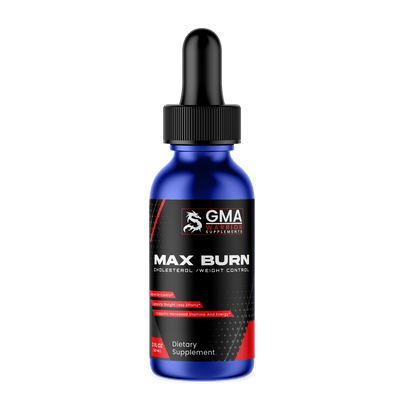
GMA Max Burn — a thermogenic aid built on evidence-based ingredients like L-carnitine, African mango, and L-arginine to support fat metabolism during training, not to replace it. Made in a USA, FDA-registered facility, third-party tested.
Shop GMA Max Burn →Are Fat Burners Safe? What to Watch For
This is a Your-Money-Your-Life topic, so let's be careful. Most fat burners are stimulant-heavy, and stacking caffeine with other stimulants raises the risk of jitteriness, a racing heart, elevated blood pressure, and poor sleep — which, ironically, undermines fat loss. If you're sensitive to caffeine, start low and never take a fat burner late in the day.
Two ingredients deserve specific caution. Concentrated green tea extract has been linked to rare cases of liver injury (the beverage itself is fine — the issue is high-dose extract), so take it with food and don't megadose. Garcinia cambogia has a handful of reported liver-toxicity cases in the medical literature. None of this makes these ingredients automatically dangerous, but it does mean you should read labels and respect doses.

The non-negotiable rule: if you're pregnant or nursing, under 18, take any medication (blood pressure and heart medications especially), or have a health condition, talk to your healthcare provider before starting any fat burner supplement. Stimulant blends interact with more medications than people realize, and "natural" doesn't mean "risk-free." For an honest look at another popular weight-loss shortcut, see our guide to apple cider vinegar benefits — what the research supports and what's oversold.
What Actually Drives Fat Loss
Here's the part the supplement industry won't put on the label: a fat burner is the last 5% of the equation, not the first 50%. The things that move the needle are unglamorous and free.
A modest, sustainable calorie deficit. Enough protein to hold onto muscle while you lose fat. Strength training to keep your metabolism high. And sleep — because poor sleep wrecks the hormones that regulate hunger and fat storage. The athletes we coach through 50+ years of martial arts training don't get lean from a bottle; they get lean from consistent conditioning, honest eating, and recovery. A thermogenic can support that work at the margins. It cannot manufacture it.
If you want to explore the products that support a metabolic-health routine the honest way, browse our weight loss and detox supplements — formulated around effective doses, not shortcuts. Then go do the work that actually burns the fat.

Sources & Research
- National Institutes of Health, Office of Dietary Supplements. "Dietary Supplements for Weight Loss — Health Professional Fact Sheet." ods.od.nih.gov
- Clark, J. E., & Welch, S. "Comparing effectiveness of fat burners and thermogenic supplements to diet and exercise for weight loss and cardiometabolic health: Systematic review and meta-analysis." Nutrition and Health, 2021. journals.sagepub.com
- Randomized controlled trial of thermogenic supplementation and fat loss in resistance-trained males. Applied Sciences, 15(5):2561, 2025. mdpi.com
- Jurgens, T. M., et al. "Green tea for weight loss and weight maintenance in overweight or obese adults." Cochrane Database of Systematic Reviews, 2012. cochranelibrary.com