Walk into any gym, dojo, or office and someone is chasing sharper focus. A nootropic supplement promises exactly that — better concentration, faster recall, and steadier mental energy when the pressure is on. But the category is crowded with bold claims and thin evidence, and as martial artists we have spent 50+ years learning to tell what actually works from what just sounds good. This guide breaks down what a nootropic supplement really is, which ingredients hold up under real research, and how to use them without wasting money or risking your health.
What Is a Nootropic Supplement, Really?
"Nootropic" is an umbrella term for substances people use to support cognitive functions like attention, memory, and mental energy. It covers three very different groups: prescription medications, lab-made synthetic compounds, and dietary supplements built from vitamins, minerals, amino acids, and plant extracts. When most people say "nootropic supplement," they mean that last group — the over-the-counter capsules and powders you can buy without a prescription.
That distinction matters. Prescription and clinically tested compounds go through rigorous safety and efficacy review. Dietary supplements do not — the FDA does not approve them for safety or effectiveness before they reach the shelf. That is not a reason to avoid them, but it is a reason to choose carefully: transparent labels, researched ingredients, and sensible doses separate a quality formula from marketing in a bottle.
Do Nootropics Actually Work? What the Research Shows
Honest answer: some ingredients have solid human evidence, many do not, and the effect sizes are usually modest rather than magical. The strongest research exists for single, well-studied ingredients. Where the science gets thin is around the multi-ingredient "proprietary blends" that dominate store shelves — rigorous trials on those finished formulas are still rare, even when each ingredient inside has been studied on its own.
So the realistic expectation for a nootropic supplement is a meaningful but measured edge: a little sharper on a long training session, a little more locked-in during a demanding work block — not a different brain. Think of it the way a fighter thinks about a good warm-up. It does not change your skill, but it helps you bring your skill to the moment.

The Nootropic Ingredients With the Best Evidence
If you want a nootropic supplement that earns its place, look for these research-backed ingredients rather than a long list of exotic names you cannot pronounce.
Caffeine + L-theanine. This is the most reliable pairing in the category. A 2025 systematic review and meta-analysis in Nutrition Reviews pooling 50 randomized controlled trials found that L-theanine combined with caffeine produced small-to-moderate improvements in attention and reaction time within the first one to two hours. L-theanine — the calming amino acid in green tea — takes the jittery edge off caffeine while supporting alertness. A typical ratio is roughly 100–200 mg L-theanine to 50–100 mg caffeine.
Creatine. Best known for strength, creatine also helps supply rapid energy to the brain. A 2024 systematic review and meta-analysis reported that creatine was associated with benefits for memory and attention, with the clearest effects appearing when people were under stress or sleep-deprived — exactly the conditions fighters and shift workers know well. Around 3–5 g of creatine monohydrate daily is the standard dose, and no loading phase is needed for cognitive support.
Bacopa monnieri. This Ayurvedic herb is a slow burn, not a same-day boost. A meta-analysis of randomized controlled trials found it may improve speed of attention, but the benefits show up after weeks of consistent use — typically 8–12 weeks at around 300 mg of a standardized extract. Patience is the price of entry.
Rhodiola rosea. An adaptogen traditionally used to help the body manage stress, Rhodiola is studied for supporting mental stamina and helping reduce the feeling of fatigue during demanding mental work. It pairs naturally with the high-output, high-stress lifestyle of anyone who trains hard.
GMA Warrior Pick
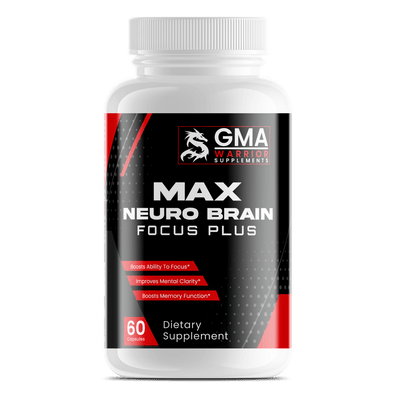
If you would rather not assemble a stack from scratch, our GMA Max Neuro Brain Focus Plus is built as a daily nootropic supplement to support focus, mental clarity, and memory — formulated by a team that has spent decades demanding sharp minds under pressure on the mats. Explore the full nootropics collection to find the right fit.
Shop Brain Focus Plus
How to Use Nootropics Safely
The same discipline that keeps you safe in training applies here. Start with one ingredient at a time so you actually know what is working — stacking five new things at once tells you nothing. Use the doses the research used, not "more is better." Take stimulant-based options like caffeine earlier in the day so they do not wreck your sleep, because poor sleep undoes any focus benefit you were chasing.
Be especially cautious with synthetic or unregulated "smart drugs" sold online — these carry far more risk than well-studied plant and amino-acid ingredients. And remember the structure-and-function reality of supplements: a quality nootropic supplement is designed to support normal cognitive function, not to treat, cure, or prevent any medical condition. If you are pregnant or nursing, under 18, taking medication, or managing a health condition, talk to your healthcare provider before starting anything new. The same goes if you are stacking a nootropic with a separate supplement for anxiety and stress — combinations deserve a professional's eyes.

Nootropics Won't Replace the Fundamentals
Here is the part the supplement industry would rather you skip: no capsule out-performs the basics. Sleep is the single most powerful cognitive tool you have, which is why we are as serious about magnesium for sleep as we are about any focus formula. Hydration, real food, and regular hard training do more for your concentration than any blend on the market.
That last point is not a throwaway line. The deepest focus most people ever experience comes not from a pill but from practice — the kind built in the 50+ years of martial arts training behind GMA. Learning to quiet the mind, breathe under pressure, and stay present in a sparring round is its own nootropic, and a far more durable one. Use a nootropic supplement as the small edge it is, build it on top of sleep and training, and you will get the most from both.
Sources & Research
- Effects of Tea or its Bioactive Compounds l-Theanine or l-Theanine plus Caffeine on Cognition, Sleep, and Mood: A Systematic Review and Meta-Analysis of RCTs — Nutrition Reviews (2025)
- The effects of creatine supplementation on cognitive function in adults: a systematic review and meta-analysis — PMC (2024)
- Meta-analysis of randomized controlled trials on cognitive effects of Bacopa monnieri extract — Journal of Ethnopharmacology (NCBI DARE)
- The Effect of l-Theanine on Cognitive Performance: Systematic Review and Meta-Analysis of Randomized Placebo-Controlled Clinical Trials — PMC (2025)