If one skincare active earns the title "workhorse," it's niacinamide. A well-formulated niacinamide serum is the rare ingredient that does several useful jobs at once — it supports a stronger skin barrier, helps even out tone and dark spots, calms visible redness, and keeps oil in check — all while being gentle enough for almost every skin type. It's the quiet, dependable ingredient rather than the flashy one, which is exactly why dermatologists reach for it so often.
Here's the honest breakdown from a school that has spent 50+ years teaching people to train hard and recover smart: what niacinamide actually does, the concentration that matters, how to layer it (including the vitamin C "rule" you can stop worrying about), and the results you can realistically expect.
What Niacinamide Actually Does for Your Skin
Niacinamide is a form of vitamin B3 (nicotinamide). Applied topically, it isn't a single-trick ingredient — it works on several fronts at once, which is what makes it so useful in a daily routine.
It supports the skin barrier. Niacinamide helps the skin produce more of its own ceramides and other barrier lipids. A stronger barrier holds onto moisture and is more resilient to irritation — the reason niacinamide often makes stronger actives (like retinol or acids) easier to tolerate.
It helps brighten and even tone. This is the "workhorse" claim people notice most. Niacinamide interrupts the transfer of pigment (melanosomes) from the cells that make it to the surface skin cells, which helps fade the look of dark spots and blotchy, uneven tone over time. In the landmark 12-week Bissett study, 5% niacinamide visibly reduced hyperpigmented spots, red blotchiness, fine lines, and sallow (yellowed) skin tone.
It calms and balances. Niacinamide has anti-inflammatory properties that help soften visible redness, and it helps regulate sebum, so skin looks less shiny and pores look less congested through the day. For more on building a full regimen around ingredients like this, see our premium skin care collection.

What Percentage of Niacinamide Do You Need?
Serum labels shout numbers — 2%, 5%, 10% — but more is not automatically better. The clinical evidence clusters in a sensible range:
2%–5% is the sweet spot. Most of the well-run studies on tone, texture, fine lines, and barrier support used concentrations in the 2%–5% range. The 5% level is where the strongest appearance data sits, and it's still comfortable for most people to use twice a day.
10% is not a shortcut. Higher-percentage serums are marketed as "extra strength," but there's little evidence that 10% outperforms 5% for brightening or barrier support — and very high concentrations are more likely to cause tingling or flushing in sensitive skin. If you're new to the ingredient, start at 5% or lower.
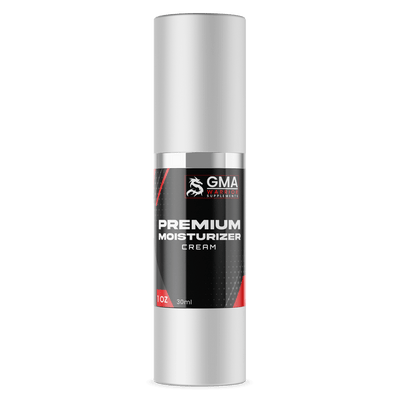
A serum delivers niacinamide in a lightweight, fast-absorbing base, but the ingredient also shows up in moisturizers. If your goal is barrier support and everyday hydration rather than a targeted brightening push, a good moisturizer can carry the same active into your routine.
GMA Warrior Premium Moisturizer Cream — a barrier-supporting cream with aloe vera, ginseng, carrot, and avocado oil that seals in a niacinamide serum and keeps hydration locked in after you apply it.
Shop Premium Moisturizer Cream →How to Use a Niacinamide Serum
Niacinamide is refreshingly low-maintenance. You can use it once or twice daily, morning and/or night, after cleansing. Apply a few drops to clean skin, pat gently, let it absorb for a minute, then follow with your moisturizer and — in the morning — sunscreen.
Layer thinnest to thickest. A water-based niacinamide serum goes on before heavier creams and oils. Morning use is especially handy for oily or combination skin, since it starts balancing shine before the day gets going.
The vitamin C "rule" is mostly a myth. You've probably read that you can't use niacinamide with vitamin C. That warning comes from decades-old lab research using unstable ingredients under high heat — conditions that don't reflect modern, stabilized skincare. In practice, dermatologists say the two layer well together and can even complement each other. Apply your vitamin C first, let it absorb for a minute or two, then follow with niacinamide. Want the companion guide? See our post on vitamin C serum for skin.
Niacinamide also pairs beautifully with hydrators. Layering it with a hyaluronic acid serum gives you barrier support plus a moisture boost in the same few steps.

What Results to Expect — and When
Niacinamide is a slow, steady ingredient, not an overnight one. Set your timeline by what you're chasing:
Oil and pores (4–6 weeks). Reduced shine and the look of smaller, less congested pores tend to show up first, often within about a month of consistent use.
Tone and brightness (8–12 weeks). Fading the appearance of dark spots and evening out blotchy tone takes longer — pigment turns over slowly, so give it two to three months before judging results. The clinical brightening data was measured at the 12-week mark for a reason.
Barrier and texture (ongoing). Smoother, more comfortable, less reactive skin builds gradually the longer you support the barrier. Consistency beats intensity every time — the same principle we teach on the mats. You don't earn a belt in a week, and you don't earn even skin tone in one either.
Is Niacinamide Serum Safe? Side Effects and Who Should Be Careful
Niacinamide is one of the best-tolerated actives in skincare, which is a big part of its appeal. Most people use it daily with no issue. That said, a few sensible notes:
Some people notice mild, temporary flushing or tingling, especially with high concentrations — another reason to start at 5% or lower. As with any new active, do a patch test on your inner forearm for a couple of days before applying it to your face, and introduce one new product at a time so you know what your skin is responding to.
If you have an active skin condition, are pregnant or nursing, or you're already using prescription treatments, talk to a board-certified dermatologist or your healthcare provider before adding a new serum. Skincare marketing loves absolutes; your skin deserves personalized advice. If irritation persists, stop use and check with a professional.

Sources & Research
- Bissett DL, Oblong JE, Berge CA. "Niacinamide: A B Vitamin that Improves Aging Facial Skin Appearance." Dermatologic Surgery, 2005;31(7 Pt 2):860–865. pubmed.ncbi.nlm.nih.gov
- Boo YC. "Mechanistic Basis and Clinical Evidence for the Applications of Nicotinamide (Niacinamide) to Control Skin Aging and Pigmentation." Antioxidants, 2021;10(8):1315. pmc.ncbi.nlm.nih.gov
- Cleveland Clinic. "Niacinamide: What It Is and Skin Benefits." health.clevelandclinic.org
- "Evaluation of the Efficacy of a Serum Containing Niacinamide, Tranexamic Acid, Vitamin C, and Hydroxy Acid Compared to 4% Hydroquinone in the Management of Melasma." PMC, 2025. pmc.ncbi.nlm.nih.gov