Search "nootropic stack for energy" and you'll find twelve-ingredient formulas promising limitless focus. Strip away the marketing and the human research points somewhere much smaller: one pairing has been tested repeatedly in controlled trials, a second has decent evidence for memory, and most of the rest are either underpowered or untested in the combination you're being sold.
That's not a reason to skip nootropics. It's a reason to know which two or three ingredients are doing the work, what dose the trials actually used, and when to take them so you're not still wired at midnight. Here's what the evidence supports, what it doesn't, and how to read a label before you spend anything.
What a "Stack" Actually Means
A stack is just two or more ingredients taken together on the theory that they work better combined than alone. That theory is reasonable. The problem is that almost every stack sold in a bottle has never been tested as a stack — the manufacturer has evidence for ingredient A, evidence for ingredient B, and no trial of A plus B in the amounts they used.
So the useful question about any nootropic stack for energy isn't "does it work." It's "has this specific combination been put in front of a control group." For alertness, one has — many times.

Caffeine + L-Theanine: The Pair With Real Trials Behind It
L-theanine is an amino acid found in tea leaves. On its own it's mild. Paired with caffeine, it has been studied more than any other combination in the nootropics category.
Owen and colleagues gave 27 healthy volunteers 50 mg of caffeine with and without 100 mg of L-theanine. The combination improved both speed and accuracy on an attention-switching task at 60 minutes and reduced how easily participants were thrown off by distracting information — an effect caffeine alone didn't produce.
A 2025 crossover trial pushed the dose higher and the conditions harder: 37 adults, kept awake overnight, given 160 mg caffeine plus 200 mg L-theanine. Selective-attention hit rate improved (P = 0.02), reaction time improved by 38 milliseconds more than placebo (P = 0.003), and the brainwave marker of attention sharpened by roughly 30 milliseconds.
Two honest caveats. These are acute effects measured within an hour or two, not proof of a lasting change. And the trials used isolated compounds at stated doses — which is exactly what most blended products won't tell you they contain.
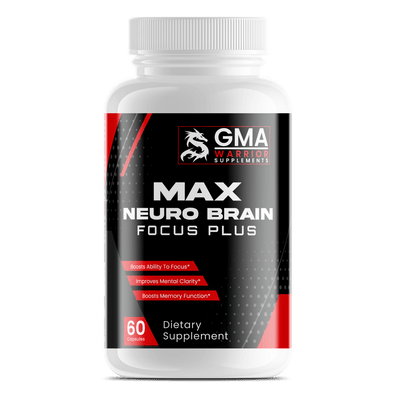
GMA Max Neuro Brain Focus Plus — our caffeine-free cognitive formula, built around choline, N-acetyl tyrosine, phosphatidylserine and huperzine A rather than stimulants. Straight talk: its ingredient list runs past thirty items and our product page doesn't print milligram amounts, so read the supplement facts panel and decide for yourself whether the ingredients you care about are dosed where the research put them.
Shop Max Neuro Brain Focus Plus →What Else Earns a Spot
Three ingredients come up constantly in energy stacks. They don't all deserve the same confidence.
Creatine has the most interesting case and the most overstated headlines. A 2024 review pooling 16 trials and 492 adults found a clear effect on memory, and faster times on attention and processing-speed tasks. But overall cognition (p = 0.22) and executive function (p = 0.12) didn't separate from placebo, European regulators criticised how the results were pooled, and a 2025 correction confirmed that attention and processing-speed scores showed nothing. Memory looks real. "Creatine makes you sharper" does not follow. If you already take it for training, you may get a small cognitive bonus — see our guide to the best time to take creatine.
Rhodiola rosea is the classic fatigue adaptogen. A systematic review screened 206 papers and included 11 trials; three of the five studying mental fatigue reported a benefit. The reviewers also concluded that every included study carried a high risk of bias or reporting flaws. Promising, not established.
Lion's mane and other functional mushrooms are the caffeine-free option people reach for when stimulants are off the table. The human evidence is early. They're a reasonable addition, not the engine of a stack.

How to Time a Nootropic Stack for Energy
The FDA cites 400 mg of caffeine a day — roughly four or five cups of coffee — as an amount not generally associated with dangerous effects in healthy adults, while noting wide variation in how sensitive people are and how fast they clear it. That ceiling includes your coffee, not just your capsules.
The bigger mistake we see isn't dose, it's clock. Caffeine has a half-life of several hours, so an afternoon serving is still working at bedtime. If you're coming to an evening class after a full workday, a stimulant stack at 4 PM buys you a sharp session and a bad night — and sleep debt costs you more focus tomorrow than any capsule returns today. Take stimulant-based stacks in the morning or early afternoon, and keep the evening slot for the non-stimulant end of the shelf. If nights are already the problem, start with what actually helps you sleep before adding anything to your mornings.
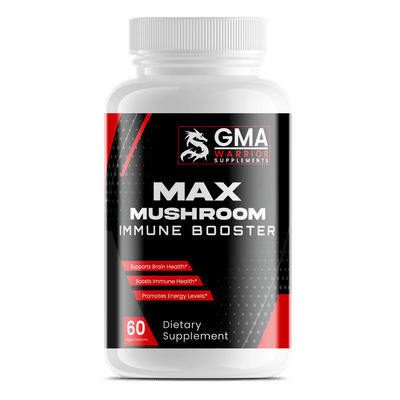
Among our own formulas, the one that pairs caffeine anhydrous with L-theanine the way the trials did is the Warrior Pre-Workout — not the brain formula. Train early in the day and that's your energy stack; train at 7 PM and it isn't. For a caffeine-free evening option, our mushroom blend includes lion's mane and cordyceps.

How to Read the Label
Three checks before you buy. First, look for milligram amounts next to every ingredient — a "proprietary blend" tells you the order of ingredients by weight and nothing else, which means you cannot know whether the theanine is at the 100–200 mg used in trials or at a dusting. Second, count the caffeine across everything you take in a day. Third, be honest about what a nootropic stack for energy is for: it sharpens an already-rested brain for an hour or two. It does not replace sleep, food or training.
Fifty years of coaching has made the pattern obvious. The students who focus best aren't the ones with the most supplements — they're the ones who sleep, eat and show up. A stack is a small edge on top of that, and it's worth exactly what the rest of your habits are worth. For the wider picture on what these ingredients do, read our fighter's guide to nootropic supplements, our breakdown of omega-3s for brain health, and what we found on magnesium for stress.
One more thing worth saying plainly: if you're pregnant or nursing, under 18, taking prescription medication, or managing a heart, blood-pressure, anxiety or sleep condition, talk to your healthcare provider before starting any stimulant or nootropic — not after.
Sources & Research
- Owen GN, Parnell H, De Bruin EA, Rycroft JA. "The combined effects of L-theanine and caffeine on cognitive performance and mood." Nutritional Neuroscience, 2008;11(4):193–198. PMID 18681988
- Nawarathna GS, Ariyasinghe DI, Dassanayake TL. "High-dose L-theanine–caffeine combination improves neurobehavioural and neurophysiological measures of selective attention in acutely sleep-deprived young adults." British Journal of Nutrition, 2025;134(3):195–204. PMID 40789769
- Xu C, Bi S, Zhang W, Luo L. "The effects of creatine supplementation on cognitive function in adults: a systematic review and meta-analysis." Frontiers in Nutrition, 2024;11:1424972 (corrigendum 2025;12:1570800). frontiersin.org
- Ishaque S, Shamseer L, Bukutu C, Vohra S. "Rhodiola rosea for physical and mental fatigue: a systematic review." BMC Complementary and Alternative Medicine, 2012;12:70. PMID 22643043
- U.S. Food & Drug Administration. "Spilling the Beans: How Much Caffeine is Too Much?" fda.gov