Magnesium is one of the safest things on the supplement shelf, and it still sends people to the bathroom, blocks their antibiotics, and — in a handful of documented cases — kills. Both halves of that sentence are true, and the gap between them is the whole story of magnesium side effects. Almost everyone who takes too much gets loose stools and nothing else. The rare serious cases share two features you can check for before you open the bottle.
Magnesium Side Effects at Normal Doses: Mostly Your Gut
When the Institute of Medicine set the safety limit for magnesium in 1997, it reviewed every reported adverse effect and picked the most sensitive one: diarrhea. The lowest dose that produced it was 360 mg a day from non-food sources, so the panel set the Tolerable Upper Intake Level for adults at 350 mg per day from supplements and medications — a margin of almost nothing, because the effect is mild and reversible.
Two things about that number matter more than the number. First, it applies to what's in the capsule, not what's on your plate: the same report states that magnesium from food has never been shown to cause any adverse effect, and no upper limit exists for it. Almonds, pumpkin seeds, spinach and dark chocolate cannot give you this side effect. Second, plenty of people take 360–380 mg with no trouble while a few get loose stools below it — the limit is drawn for the sensitive end.
The mechanism is osmotic: unabsorbed magnesium pulls water into the bowel. That's the entire reason magnesium oxide is sold as a laxative. In a 2021 randomized trial in the American Journal of Gastroenterology, 1.5 g of magnesium oxide a day resolved chronic constipation in 68% of patients against 12% on placebo, with zero severe adverse events. Same compound, higher dose, intended effect. Nausea and cramping can ride along; both fade when you drop the dose.

When Too Much Magnesium Becomes Dangerous
The serious version is hypermagnesemia — too much magnesium in the blood — and the research on it is unusually consistent. A 2019 review in Acta Clinica Belgica put it plainly: severe hypermagnesemia is "almost exclusively observed in patients with substantially decreased kidney function associated with high magnesium intake through supplements or magnesium containing cathartics or antacids." The Institute of Medicine said the same two decades earlier: with normal kidneys, it has not been documented from oral magnesium.
The published fatalities show what it takes. A 2006 case report in Internal Medicine describes an elderly patient on magnesium-containing laxatives who died on the fourth hospital day; the warning signs were low blood pressure, slow heart rate, absent reflexes and slowed breathing. A 2000 report in Pediatrics describes a child given unsupervised high-dose magnesium oxide in a "megamineral" regimen. Serious neurological and cardiac symptoms begin only once blood magnesium passes roughly 2 to 3.5 mmol/L — two to four times normal — a level ordinary supplement doses don't reach in a healthy adult.
So the pattern behind every dangerous case is the same: kidneys that can't keep up, plus a large pharmacological dose — laxatives, antacids, Epsom salts, or a stack of products each carrying magnesium. The Gröber review in Nutrients sets the caution line at a creatinine clearance under 30 mL/min, where the risk of heart block rises. If that's you, supplement decisions belong with your doctor, not a blog post.

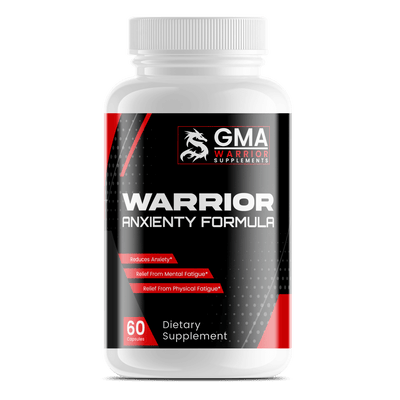
GMA Anxiety Formula — straight talk: we don't make a standalone magnesium supplement. This is our evening relaxation blend, and its supplement facts panel prints 25 mg of magnesium oxide per two-capsule serving — 6% of the daily value and about 7% of the supplement upper limit. That makes it irrelevant to the side effects on this page, and just as irrelevant to closing a magnesium gap; the formula earns its place on the chamomile, lemon balm, valerian and L-theanine. Its blend also includes St. John's wort, so if you take any prescription medication, ask your pharmacist before adding it. Read the label photo first.
Shop GMA Anxiety Formula →Medications That Don't Mix With Magnesium
Antibiotics. Magnesium binds fluoroquinolones and tetracyclines in the gut so they never reach your bloodstream. A crossover study in Clinical Pharmacology & Therapeutics gave volunteers ciprofloxacin at set intervals after a magnesium-aluminum antacid: minutes apart, only 15% of the antibiotic was absorbed; two hours apart, 23%; four hours apart, 70%. Six hours before or two hours after, no effect. Take the antibiotic first and the magnesium at least two hours later.
Bisphosphonates. Bone-density medications have the same absorption problem. Separate them by at least two hours.
Blood pressure medication. A 2016 meta-analysis of 34 placebo-controlled trials in Hypertension found supplemental magnesium — median 368 mg a day — lowered systolic pressure by 2 mm Hg and diastolic by 1.8. Small, but it adds to a blood pressure drug. Mention it to your prescriber.
Drugs that lower your magnesium. A 2012 systematic review in Alimentary Pharmacology & Therapeutics confirmed that proton pump inhibitors — the daily heartburn pills — deplete magnesium as a class effect, typically after years of use, with levels recovering about four days after stopping. Loop and thiazide diuretics increase losses too. Both are a reason to ask for a blood test, not to self-prescribe a high dose.
Who Should Talk to a Doctor Before Taking Magnesium
The research points at a short list. Anyone with kidney disease, for the reasons above. Anyone with a slow heart rate or a heart-conduction problem, since magnesium slows conduction further. Anyone on the medications listed. And the standard groups for every supplement — pregnant or nursing, under 18, or managing a diagnosed condition — where the honest answer is a conversation with your healthcare provider, not a dose from us.
And older adults: magnesium isn't part of routine bloodwork, so nobody sees it coming. If a parent takes magnesium laxatives or antacids daily, raise it at their next appointment.

How to Take Magnesium Without the Side Effects
- Read the elemental figure. "1,000 mg magnesium bisglycinate" is not 1,000 mg of magnesium. The supplement facts panel prints the elemental amount; that's the number to keep under 350 mg.
- Split the dose. Absorption falls as a single dose rises, and the unabsorbed remainder is what loosens your stool.
- Take it with food. The Institute of Medicine's own reading is that food in the gut counteracts the osmotic effect.
- Pick the form for the job. Citrate and oxide draw water into the bowel; glycinate is the gentle evening form — our guide to magnesium glycinate vs citrate covers the trade-off. In a 2025 placebo-controlled trial of 250 mg bisglycinate nightly for four weeks, the magnesium group logged two mild adverse events against seven on placebo, and nobody dropped out.
- Count every source. Multivitamins, pre-workouts, antacids and sleep blends all carry magnesium. Add them up before you add a standalone.
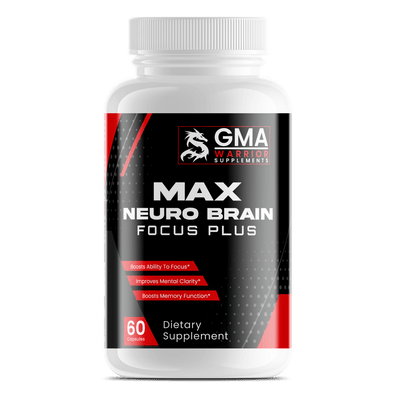
A note from fifty years of running a martial arts school: the adults in our evening classes ask about magnesium more than any other mineral, usually for leg cramps or shallow sleep. The ones who do well start low — 100 to 200 mg of a glycinate form at night — and the ones who overshoot learn about magnesium side effects the same morning. Our guide to magnesium glycinate for sleep has the dosing, our write-up on magnesium for anxiety covers the stress side, and our review of natural sleep supplements puts it next to melatonin and valerian. For the wider evening stack, see our Nootropics collection; Max Neuro Brain Focus Plus also lists magnesium, so count it if you take both.
Sources & Research
- Institute of Medicine, Food and Nutrition Board. "Magnesium." In Dietary Reference Intakes for Calcium, Phosphorus, Magnesium, Vitamin D, and Fluoride. National Academies Press, 1997. nap.nationalacademies.org
- Van Laecke S. "Hypomagnesemia and hypermagnesemia." Acta Clinica Belgica, 2019;74(1):41–47. PMID 30220246
- Onishi S, Yoshino S. "Cathartic-induced fatal hypermagnesemia in the elderly." Internal Medicine, 2006;45(4):207–210. PMID 16543690
- McGuire JK, Kulkarni MS, Baden HP. "Fatal hypermagnesemia in a child treated with megavitamin/megamineral therapy." Pediatrics, 2000;105(2):E18. PMID 10654978
- Gröber U, Schmidt J, Kisters K. "Magnesium in Prevention and Therapy." Nutrients, 2015;7(9):8199–8226. PMID 26404370
- Nix DE, Watson WA, Lener ME, et al. "Effects of aluminum and magnesium antacids and ranitidine on the absorption of ciprofloxacin." Clinical Pharmacology & Therapeutics, 1989;46(6):700–705. PMID 2598571
- Hess MW, Hoenderop JG, Bindels RJ, Drenth JP. "Systematic review: hypomagnesaemia induced by proton pump inhibition." Alimentary Pharmacology & Therapeutics, 2012;36(5):405–413. PMID 22762246
- Zhang X, Li Y, Del Gobbo LC, et al. "Effects of Magnesium Supplementation on Blood Pressure: A Meta-Analysis of Randomized Double-Blind Placebo-Controlled Trials." Hypertension, 2016;68(2):324–333. PMID 27402922
- Morishita D, Tomita T, Mori S, et al. "Senna Versus Magnesium Oxide for the Treatment of Chronic Constipation: A Randomized, Placebo-Controlled Trial." American Journal of Gastroenterology, 2021;116(1):152–161. PMID 32969946
- Schuster J, Cycelskij I, Lopresti A, Hahn A. "Magnesium Bisglycinate Supplementation in Healthy Adults Reporting Poor Sleep: A Randomized, Placebo-Controlled Trial." Nature and Science of Sleep, 2025;17:2027–2040. PMID 40918053