If you've been down the sleep-supplement rabbit hole at 2am wondering why you can't fall asleep, you've probably run into magnesium. And not just any magnesium — specifically magnesium glycinate, which has gone from a niche supplement on a few biohacker blogs to the most-searched sleep mineral on the internet. Search volume for "magnesium glycinate sleep" is up over 300% in the last year.
We coach athletes at our martial arts school, and sleep is one of the first things we audit when a student plateaus in training. Strength gains, technique retention, injury recovery, body composition — everything compounds or breaks down based on how well you sleep. So when we started seeing the same handful of supplement questions come up over and over in the gym ("does magnesium really work?", "is glycinate actually different from citrate?", "how much should I take?"), it was time to write the answer down properly.
This is that answer. Evidence-based, no hype, no miracle claims. Just what the research actually shows, why glycinate is the form worth caring about, how to use it, and when to skip it.
The Short Version (If You Only Read This Much)
- Magnesium helps regulate the nervous system, supports GABA activity, and calms the signals that keep you awake.
- Of the common forms, magnesium glycinate is the one backed by the strongest bioavailability evidence plus the added sleep-supportive role of glycine itself.
- Clinical research suggests magnesium supplementation can shorten sleep onset by roughly 15–17 minutes on average in adults with poor sleep.
- Typical effective dose: 200–400 mg of elemental magnesium taken 30–60 minutes before bed.
- It is not a sedative. You won't feel "knocked out." You'll feel less wired and fall asleep more easily if your sleep problems are related to a magnesium gap, stress, or an overactive nervous system.
- It's generally safe, but check with a doctor if you have kidney issues, are pregnant, or take prescription meds.
Now the long version.
What Magnesium Actually Does in Your Body (and Why Sleep Cares)
Magnesium is involved in over 300 enzymatic reactions. That statistic gets tossed around so much it's lost its meaning, so let's be specific about the ones that matter for sleep:
It regulates the "stop signals" in your nervous system. Your brain has two main neurotransmitter families — excitatory (glutamate, the "go") and inhibitory (GABA, the "stop"). Magnesium acts as a natural blocker on NMDA receptors, which are part of the glutamate system. Translation: magnesium helps turn down the "go" signal so the "stop" signal can do its job and actually let you sleep.
It supports melatonin production. A 2012 randomized controlled trial in elderly adults with insomnia found that 500mg of daily magnesium supplementation for eight weeks significantly increased serum melatonin compared to placebo, along with improvements in sleep time and sleep efficiency. Melatonin is the hormone that tells your body it's nighttime — without enough of it, your brain keeps acting like it's still the middle of the afternoon.
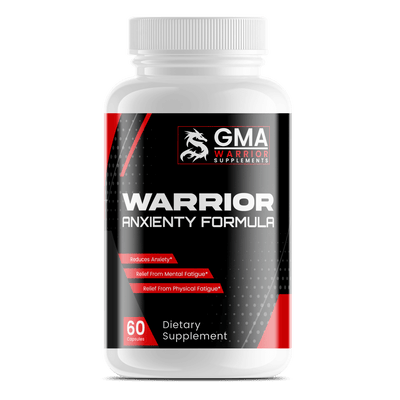
It helps lower cortisol. That same trial showed reductions in serum cortisol, the stress hormone that keeps your heart rate up and your mind racing. If you've ever been dog-tired but still lay in bed with your thoughts doing laps, that's cortisol. This is one of the reasons we include magnesium in our Anxiety Formula — it works on the cortisol pathway directly.
It regulates muscle relaxation. Magnesium is essential for calcium regulation — without it, muscles can't relax properly after contracting. The restless-legs-at-bedtime feeling, the random twitches, the inability to physically settle down — those can all trace back to the magnesium-calcium balance.
It plays a role in neuroplasticity. A 2024 study in Nature Communications showed that intracellular magnesium optimizes the efficiency and plasticity of hippocampal synapses — the part of the brain critical for memory consolidation during sleep. That matters because deep sleep isn't just about being unconscious; it's when your brain files the day away.

Why the "Glycinate" Part Matters
Here's the thing most supplement bottles don't tell you: magnesium doesn't exist by itself in supplement form. It has to be bound to something else — a carrier molecule called a ligand. That carrier dramatically affects how much of the magnesium actually reaches your bloodstream.
The most common forms you'll find on a shelf:
Magnesium Oxide
The cheapest. Also the worst absorbed. Only about 4-15% of what you swallow actually gets into your bloodstream. The rest pulls water into your intestines and acts as a laxative. If a cheap drugstore "magnesium" gives you loose stools, this is almost always why. Great if you need it for constipation, terrible for sleep.
Magnesium Citrate
Better absorbed than oxide, moderately priced. Also has a mild laxative effect at higher doses. A 1990 bioavailability study found magnesium citrate significantly outperformed magnesium oxide in urinary magnesium excretion (a proxy for absorption). Good option, especially if you also want digestive regularity. Less ideal if you're taking it for sleep because the gut stimulation can be counterproductive.
Magnesium Glycinate (also called Magnesium Bisglycinate)
This is the sleep one. Magnesium is bound to two molecules of glycine, an amino acid. The chelated structure is absorbed intact in the small intestine and bypasses stomach acid dependency, which means consistent absorption even if you have low stomach acid or GI issues. Most importantly, it's gentle — no laxative effect at normal doses.
But here's what separates glycinate from citrate for sleep specifically: glycine itself has sleep-promoting properties. Glycine acts on NMDA receptors and has been shown in some research to improve sleep quality when taken before bed at doses around 3 grams. You don't get 3g of glycine from a magnesium glycinate capsule — the content is closer to 1.5g per 250mg of elemental magnesium — but there's a plausible synergistic effect.
Magnesium L-Threonate
The "brain form." More expensive, and the research is newer. Unlike other magnesium forms, it can cross the blood-brain barrier more effectively. A 2024 randomized controlled trial published in Sleep Medicine X gave 80 adults with sleep problems 1 gram of magnesium L-threonate daily for 21 days and found significant improvements in sleep quality measures compared to placebo. Worth considering if glycinate doesn't move the needle and you want to try something brain-targeted.
Magnesium Malate, Taurate, Orotate, and friends
Various binders with various sales pitches. Some are legitimate for specific uses (malate for muscle energy, taurate for heart health), but none have the combined bioavailability-plus-sleep-synergy case that glycinate has for the purpose we're talking about here.

What the Research Actually Says About Magnesium and Sleep
Let's separate the hype from the evidence, because sleep supplements are a $5 billion industry and everyone is motivated to overstate.
The strongest findings, honestly reported:
A 2021 systematic review and meta-analysis pooled data from three randomized controlled trials in older adults with insomnia (151 participants total). The result: magnesium supplementation reduced sleep onset latency by an average of 17.36 minutes compared to placebo (95% CI, 7.44 to 27.27 minutes). Total sleep time improved by about 16 minutes in the magnesium group, though this didn't reach statistical significance.
A 2012 double-blind placebo-controlled trial of 46 elderly adults with primary insomnia found that 500mg of daily magnesium for 8 weeks significantly improved ISI (Insomnia Severity Index) scores, sleep time, sleep efficiency, serum melatonin, and serum renin compared to placebo, while reducing early morning awakening and serum cortisol.
A 2024 randomized controlled trial — the largest placebo-controlled trial on magnesium and sleep to date — tested magnesium bisglycinate (glycinate) specifically in healthy adults reporting poor sleep. It found a statistically significant reduction in insomnia severity (ISI scores) in the glycinate group, with most of the improvement happening within the first 14 days and holding steady after. Side effects occurred less often in the magnesium group than in placebo.
A 2024 systematic review in the Cureus journal concluded that supplemental magnesium is likely useful in the treatment of mild anxiety and insomnia, particularly in those with low magnesium status at baseline.
The honest caveats:
Not every study has shown significant effects. A 2024 systematic review noted that out of five interventional trials reviewed, two showed improvements in sleep efficiency/time/latency, and three did not. The total participant pool across magnesium-sleep trials is still relatively small. Most of the strongest evidence is in populations with either low magnesium status to begin with, older adults, or people with self-reported poor sleep — not young healthy adults who just want a slightly better night.
What this means practically: If you have poor sleep AND you suspect your magnesium intake is low (processed food diet, heavy sweating from training, chronic stress, or high alcohol consumption), the evidence supports trying magnesium glycinate before reaching for anything else. If your sleep problems are severe or related to a medical condition (sleep apnea, severe anxiety disorder, circadian rhythm disorder), magnesium is not going to solve those on its own and you need to see a doctor.
How to Actually Use It
Dose: 200–400mg of elemental magnesium per day.
"Elemental" is the keyword. When you read a supplement label, it might say "Magnesium Bisglycinate 2000mg" on the front, but the back panel will show you the actual elemental magnesium — usually 200-400mg. That's the number that matters.
The RDA (Recommended Dietary Allowance) for magnesium is 400-420mg per day for adult men and 310-320mg for adult women, including what you get from food. Most Americans fall short of this through diet alone — magnesium is abundant in leafy greens, nuts, seeds, and legumes, but processed food diets are famously magnesium-poor.
Timing: 30–60 minutes before bed.
This gives it time to absorb and start acting on the nervous system before you try to sleep. If you're taking a larger dose (over 300mg), splitting it (half in the afternoon, half before bed) can reduce the risk of any GI effects.
How long until it works:
The 2024 bisglycinate trial found most improvements happen within the first 14 days. Give it a full two weeks of consistent nightly use before deciding it doesn't work. One night won't tell you anything.
With or without food:
With food is gentler on the stomach but can slightly slow absorption. Without food is faster-acting but occasionally causes mild nausea in sensitive people. Experiment and find what works. Most people do well taking it with a small snack before bed.

Who Should NOT Take Magnesium Glycinate (or Should Talk to a Doctor First)
Magnesium is generally one of the safer supplements you can take — it has a good safety profile and a high therapeutic index. But there are real cases where you need to check with a doctor first:
- Kidney disease or reduced kidney function. Magnesium is cleared by the kidneys. If they're not working properly, magnesium can accumulate to toxic levels.
- Heart block or certain heart rhythm disorders. Magnesium affects cardiac conduction.
- Prescription medications. Magnesium can interact with several drug classes including certain antibiotics (tetracyclines, quinolones), bisphosphonates, diuretics, and PPIs. Spacing the timing by 2+ hours usually solves the issue, but confirm with your doctor or pharmacist.
- Pregnancy or breastfeeding. Magnesium is generally considered safe during pregnancy and is often deficient in pregnant women, but dosing should be guided by your OB.
- Children. Pediatric dosing is different. Don't guess.
- Active GI issues (Crohn's, ulcerative colitis, chronic diarrhea). Absorption is impaired and high doses may worsen symptoms.
Signs of too much magnesium (extremely rare from oral supplementation in healthy people, but worth knowing): diarrhea, nausea, cramping, low blood pressure, confusion, irregular heartbeat. Stop taking it and see a doctor if any of these occur.
What to Stack With Magnesium Glycinate (If You Want To)
Magnesium glycinate works well on its own, but if your sleep problem is more complex than just "can't relax," these are the evidence-backed combinations:
- Glycine (in addition to the small amount bound in the glycinate): 3g taken before bed has some evidence for improving sleep quality.
- L-theanine: 100-200mg, particularly good if your sleep issue is anxiety-driven or mental-chatter-at-night. Works via increasing alpha brain waves associated with relaxation.
- Chamomile: A traditional relaxation herb with GABAergic activity. Well-tolerated and safe.
- Valerian root: Stronger sedative effect than chamomile. Effective for mild insomnia but has a distinctive smell and can cause morning grogginess if dosed too high.
- Passion flower, lemon balm, and magnolia bark: All work on the GABA system via different mechanisms. Good for layered formulations.
- 5-HTP: The precursor to serotonin, which in turn is a precursor to melatonin. Useful when low mood and poor sleep come together. Don't combine with SSRIs.
- GABA itself: The inhibitory neurotransmitter. The research on oral GABA crossing the blood-brain barrier is mixed, but clinical trials and anecdotal reports suggest benefit.
This is roughly the formulation logic behind our own GMA Anxiety Formula: magnesium + GABA + L-theanine + ashwagandha + chamomile + lemon balm + passion flower + valerian root + 5-HTP + magnolia, in a single capsule you take before bed. If you've been stacking three or four supplements to get this coverage, a single formula like this might save you a shelf of bottles. Browse the rest of our Nootropics collection for additional focus and cognitive support options.
Where This Fits at GMA
We built GMA Anxiety Formula around the same principle this whole post is about: the best sleep and stress support isn't one ingredient, it's a set of ingredients working on complementary pathways. Magnesium handles the nervous-system foundation. Chamomile, lemon balm, and valerian hit the GABA system from different angles. L-theanine calms mental chatter. Ashwagandha regulates cortisol. 5-HTP supports the serotonin-to-melatonin pathway.
If you're just looking to try magnesium alone first, that's a legitimate starting point — a plain magnesium glycinate supplement from any reputable brand is fine. If you've already tried magnesium alone and want the fuller spectrum, our Anxiety Formula is the complete stack in one bottle.
The real honest answer: GMA doesn't currently carry a standalone magnesium glycinate product. We're considering adding one specifically because of how many readers ask about it. If that would be useful to you, hit the contact form and let us know — we actually do read those emails.
In the meantime, if you want the complete sleep-and-stress formulation our coaches built, that's the Anxiety Formula. If you want to stick with just magnesium glycinate from another brand, that's fine — look for an NSF-certified or third-party-tested product with 200-300mg elemental magnesium per serving and no fillers.
The Bottom Line
If you're asking "does magnesium glycinate actually help with sleep?" — the answer is a qualified yes, based on the best available research. It works best in people with existing magnesium shortfalls (which, based on American dietary patterns, is most of us). It works gradually, not instantly. It's safe for almost everyone when dosed sensibly. And it's one of the few supplements where the mechanism, the evidence, and the practical effect all line up.
Try it for two weeks, 200-300mg of elemental magnesium, glycinate form, 30-60 minutes before bed. See how you feel. Adjust from there.
Sleep is the foundation everything else builds on. If you fix this one thing, a lot of other things get easier.
References / Key Studies Cited
- Mah J, Pitre T. Oral magnesium supplementation for insomnia in older adults: a systematic review & meta-analysis. BMC Complement Med Ther. 2021;21(1):125.
- Abbasi B, et al. The effect of magnesium supplementation on primary insomnia in elderly: a double-blind placebo-controlled clinical trial. J Res Med Sci. 2012;17(12):1161-1169.
- Rawji A, et al. Examining the Effects of Supplemental Magnesium on Self-Reported Anxiety and Sleep Quality: A Systematic Review. Cureus. 2024;16(4):e59317.
- Hausenblas HA, et al. Magnesium-L-threonate improves sleep quality and daytime functioning in adults with self-reported sleep problems: a randomized controlled trial. Sleep Med X. 2024;8:100121.
- Magnesium Bisglycinate Supplementation in Healthy Adults Reporting Poor Sleep: A Randomized, Placebo-Controlled Trial. Nature and Science of Sleep. 2024.
- Zhou H, et al. Intracellular magnesium optimizes transmission efficiency and plasticity of hippocampal synapses. Nat Commun. 2024;15(1):3406.
- Nielsen FH, et al. Magnesium supplementation improves indicators of low magnesium status and inflammatory stress in adults older than 51 years with poor quality sleep. Magnes Res. 2010;23(4):158-168.