Stand in front of a shelf of serums long enough and the decision comes down to two bottles. Retinol vs vitamin C is the skincare question we get asked more than any other, and the honest answer is that these two aren't competitors. They solve different problems, on different timelines, through completely different biology. One rebuilds. One defends.
Below: what the clinical research actually supports for each, which one to start with based on the concern you're trying to fix, whether you can use them together (yes — with one caveat worth understanding), and how to run both in the same routine without shredding your skin barrier by week two.
Retinol vs Vitamin C: What Each One Actually Does
Retinol is an over-the-counter form of vitamin A. Your skin converts it into retinoic acid, and that's the molecule doing the work — speeding up cell turnover, signaling fibroblasts in the dermis to produce more procollagen, and helping hold back the enzymes that chew through the collagen you already have. Think of it as the renovation crew. It changes the structure of the skin, which is exactly why it takes months and why it can irritate on the way there.
Vitamin C — in its most-studied form, L-ascorbic acid — plays a different position. It's an antioxidant that neutralizes free radicals generated by UV exposure and pollution before those free radicals can damage collagen. It's also a required cofactor for the enzymes that cross-link collagen fibers, and it interferes with tyrosinase, the enzyme that drives pigment production, which is why it's the go-to ingredient for uneven tone and lingering dark spots. It's the bodyguard, not the builder.
Both are cosmetic ingredients that support the appearance and structure of healthy skin. Neither is a treatment for a medical skin condition — if you're dealing with persistent acne, melasma, or rosacea, that's a conversation for a board-certified dermatologist, not a serum aisle.

What the Research Actually Shows
On the retinol side, the cleanest evidence comes from a randomized, double-blind, vehicle-controlled trial published in Archives of Dermatology in 2007. Researchers applied 0.4% retinol lotion to one arm and the vehicle alone to the other in 36 participants with a mean age of 87, three times a week for 24 weeks. Fine-wrinkle scores improved by 1.64 points on the retinol arm versus 0.08 on the control arm (P<.001), and skin biopsies showed significantly more glycosaminoglycan (P=.02) and procollagen I (P=.049) in the treated skin. That's a structural change, measured in tissue, in the population where change is hardest to produce.
On the vitamin C side, a six-month double-blind trial in Experimental Dermatology tested a 5% vitamin C cream against its own vehicle on photoaged skin of the neck and forearms. Clinical scoring and silicone skin replicas both showed significant improvement in deep furrows, and end-of-trial biopsies showed ultrastructural evidence of elastic-tissue repair in the dermis.
Read those two together and the honest summary is this: retinol has the deeper, longer, more consistent evidence base for wrinkle-specific change, while vitamin C's most reliable wins are tone, brightness, and antioxidant defense, with real but more variable structural data behind it. A large part of that variability is formulation — vitamin C trials differ wildly in concentration, pH, and vehicle, which is why two serums with the same percentage on the label can perform nothing alike.
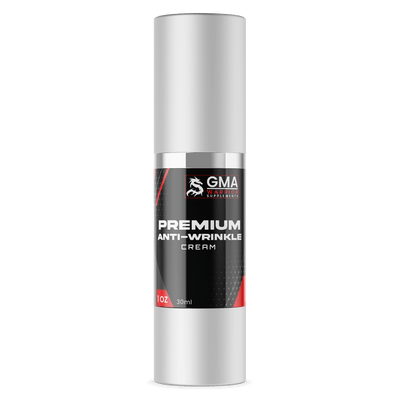
GMA Warrior Premium Anti-Wrinkle Cream — a botanical anti-aging cream built on aloe vera, ginseng, carrot, and cucumber, third-party tested for heavy metals and made in a GMP-certified, FDA-registered U.S. facility. It's the supportive layer in a routine built around actives, not a replacement for them.
Shop Premium Anti-Wrinkle Cream →Which One Should You Start With?
Pick based on the problem in the mirror, not the marketing on the box.
Start with retinol if your main concerns are fine lines, crepey texture, rough surface tone, or visible sun damage that's already set in. Retinol is the ingredient with the most direct evidence for changing skin structure, and nothing else available over the counter matches its track record. Set expectations honestly first — our guide to before and after retinol walks through the realistic week-by-week timeline.
Start with vitamin C if your concerns are dullness, uneven tone, or dark spots left over from past sun exposure — or if you spend real time outdoors and want daytime antioxidant defense. It's also the gentler entry point. If you're new to active skincare or your skin runs sensitive and reactive, vitamin C is the easier first move, and our vitamin C serum guide covers choosing a concentration and form that your skin will actually tolerate.
Two caveats worth stating plainly. If you're pregnant or nursing, retinoids are off the table — talk to your healthcare provider before starting any of this. And whichever you choose, the American Academy of Dermatology's advice is to add one new active at a time and give it a few weeks before layering in another. Skin will tell you what it thinks; you just have to give it room to answer.

Can You Use Retinol and Vitamin C Together?
Yes — and the rule you've probably heard against it came from a formulation quirk, not from skin biology.
Here's the actual issue. Pure L-ascorbic acid is stable and active at a low pH, around 3.5. Retinol prefers an environment closer to neutral. Mix them in the same palmful and you can compromise both. That's a layering problem, not a compatibility problem, and the fix is simply not to blend them in your hand.
The split that clinical practice settled on: vitamin C in the morning, under sunscreen. Retinol at night. That schedule matches how each ingredient works — the antioxidant on duty during the hours you're actually exposed to UV and pollution, the collagen signal working while you sleep — and it sidesteps the sun sensitivity retinol causes. Used this way, the two are complementary rather than competing, protecting skin against UV-driven damage through separate mechanisms that also supplement (never replace) your sunscreen.
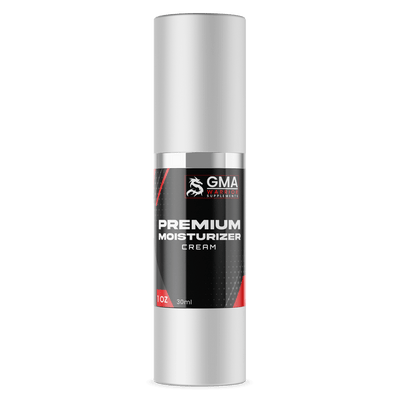
The one thing that genuinely breaks skin is starting both at full strength in the same week. If you're going to run both, get one established first, then introduce the second. And keep a plain moisturizer in the rotation — GMA Warrior Premium Moisturizer Cream works as the buffer layer that keeps the barrier calm while retinol does its slow work.
How to Build a Routine With Both
Morning: cleanse, apply vitamin C to dry skin, follow with moisturizer, then broad-spectrum sunscreen. Sunscreen is non-negotiable in a routine containing either ingredient — retinol explicitly increases sun sensitivity, and using an antioxidant without sun protection is like taping the windows before a hurricane and leaving the door open.
Night: cleanse, apply a pea-sized amount of retinol to dry skin, follow with moisturizer. Start every other night for the first two to three weeks, then move toward nightly only if your skin stays calm. Redness, flaking, and tightness are signals to reduce frequency — not to quit. If the stinging is real, sandwich it: moisturizer first, retinol second, moisturizer again. Our guide to how to use retinol without irritation breaks that ramp down step by step.
Then give it time. The retinol trial that produced measurable structural change ran 24 weeks at three applications a week — not four weeks, and not "when I remember." Twelve weeks is the minimum honest checkpoint. Skip a month and you're not evaluating the ingredient, you're evaluating your consistency.
That's the same principle we've been teaching on the mats for over 50 years at Global Martial Arts USA: one technique, drilled correctly, on a schedule, beats five techniques attempted badly. Skin care rewards the exact same discipline. Pick the ingredient that matches your concern, run it long enough to judge it, and layer the second one in once the first has earned its place.

Both ingredients live in our Premium Skin Care collection philosophy: research-backed formulas, fully disclosed labels, third-party tested, made in the USA. If you want to go deeper on layering actives without irritation, our breakdown of niacinamide serum covers the third ingredient most people add next.
Sources & Research
- Kafi R, Kwak HS, Schumacher WE, et al. "Improvement of Naturally Aged Skin With Vitamin A (Retinol)." Archives of Dermatology, 2007;143(5):606–612. pubmed.ncbi.nlm.nih.gov
- Humbert PG, Haftek M, Creidi P, et al. "Topical ascorbic acid on photoaged skin. Clinical, topographical and ultrastructural evaluation: double-blind study vs. placebo." Experimental Dermatology, 2003;12(3):237–244. onlinelibrary.wiley.com
- "Vitamin C, Topical Retinoids, and Sunscreen in Clinical Practice: Essentials for Family Physicians." Osteopathic Family Physician, 2024;16(3). acofp.org
- American Academy of Dermatology Association. "Retinoid or Retinol?" aad.org