Most supplements to lower cortisol are sold on a simple promise: stress hormone down, belly fat gone, sleep fixed. The research is narrower and more interesting than that. A handful of ingredients do move cortisol in controlled human trials, a few more have only weak data, and the biggest levers cost nothing. This guide covers what cortisol is supposed to do, which supplements have real numbers behind them, how big those numbers are, and where they fit next to sleep and training.
What Supplements to Lower Cortisol Can and Can't Do
Cortisol isn't the enemy. It follows a daily rhythm, peaking shortly after you wake to get you moving, then tapering through the evening so you can sleep. It also rises on demand. In a 2008 study in the Journal of Endocrinological Investigation, 30 minutes of exercise at 60% of maximal effort raised circulating cortisol about 40%, and at 80% it rose about 83%. Easy exercise at 40% barely moved it and, after the researchers corrected for time of day, actually lowered it.
That spike is part of how training works. So the realistic goal for any supplement isn't "less cortisol." It's a healthier stress response: a lower baseline when life stays stressful for weeks, a smaller surge to the same stressor, and a rhythm that winds down at night. The trials below measure exactly those things, and that's how to read them.

Ashwagandha: The Most Studied Cortisol Supplement
Ashwagandha has more cortisol trials than any other herb. In a 2012 study in the Indian Journal of Psychological Medicine, 64 adults with long-term stress took 300 mg of root extract twice a day or a placebo for 60 days. Serum cortisol fell significantly more in the ashwagandha group, and stress questionnaire scores improved. A 2019 trial in Cureus compared 250 mg and 600 mg a day for eight weeks, and cortisol dropped at both doses, more clearly at the higher one. A 2019 trial in Medicine found lower morning cortisol on just 240 mg a day.
The pooled data is where it gets honest. A 2025 meta-analysis in Nutrition and Health combined seven trials and found cortisol fell by about 1.16 µg/dL versus placebo. That's a real, measurable shift, but the same analysis found no significant change in perceived stress across six trials. A larger 2026 review in Planta Medica (23 trials, 1,706 people) also confirmed the cortisol drop and noted the effect may track the extract's withanolide content. The number on the lab report moves more reliably than how stressed people say they feel.
Ashwagandha isn't for everyone. The National Center for Complementary and Integrative Health (NCCIH) advises against it during pregnancy and for people with thyroid or autoimmune conditions, and rare liver injury has been reported. Read our guide to ashwagandha side effects before you start.
Phosphatidylserine and Omega-3: Blunting the Spike
Two other ingredients work differently. Instead of lowering baseline cortisol, they seem to take the edge off the surge.
Phosphatidylserine (PS) is a fat found in cell membranes. In a small 2008 crossover study in the Journal of the International Society of Sports Nutrition, 10 healthy men took 600 mg a day for 10 days before a hard cycling test. Peak cortisol after exercise was about 39% lower on PS than on placebo. A 2014 trial in Lipids in Health and Disease gave 75 men a PS complex before a public-speaking stress test. The 400 mg dose brought cortisol responses back toward normal, but only in men who were chronically stressed going in. The 200 mg dose did nothing, and nobody reported feeling less stressed.
Omega-3s have one well-run trial. In a 2021 study in Molecular Psychiatry, 138 sedentary, middle-aged adults took 2.5 g or 1.25 g of omega-3 a day, or a placebo, for four months. During a lab stress test, the 2.5 g group's overall cortisol was 19% lower than placebo. That's a high dose, well above a typical capsule. Our fish oil benefits guide covers how to get there and what else it does.

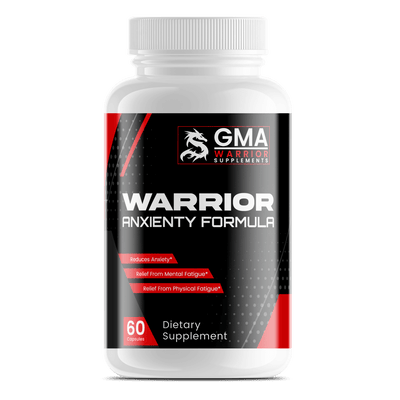
GMA Anxiety Formula is our evening wind-down blend, and it contains two of the herbs above. Straight talk on the amounts: rhodiola (standardized to 1% salidroside) and ashwagandha sit inside an 830 mg proprietary blend of 18 herbs per two-capsule serving, and the label doesn't print how much of each. Blend ingredients are listed by weight. Rhodiola is first, and ashwagandha is third, so a serving holds no more than about 275 mg of ashwagandha, at the low end of the 240 to 600 mg used in the cortisol trials. It contains no phosphatidylserine or omega-3. The blend also includes St. John's wort, valerian and 5-HTP, which can interact with many medications, so check with your pharmacist or doctor first if you take any. Follow the label.
Shop GMA Anxiety Formula →Rhodiola, Magnesium and L-Theanine: Thinner Evidence
Rhodiola has one notable cortisol result. In a 2009 trial in Planta Medica, 60 adults with long-term, stress-related fatigue took 576 mg a day of a specific standardized extract or a placebo for 28 days. The rhodiola group's cortisol response on waking changed significantly compared with placebo, and their attention scores improved. It's one small trial of one branded extract. NCCIH's summary is blunt: there isn't enough reliable evidence to say rhodiola helps with any health purpose. It's possibly safe for up to 12 weeks, with dizziness, headache and trouble sleeping among the reported side effects.
Magnesium plays a role in the body's normal stress response, and low intake is common, but direct trials showing it lowers cortisol in healthy people are thin. If you're low, it's worth fixing for its own sake. Our guide to natural supplements for anxiety covers what magnesium does and doesn't do. L-theanine is better at calm focus than at cortisol, which our L-theanine focus guide explains.
Be skeptical of any label promising to "block" cortisol. If you're worried your cortisol is genuinely too high or too low, that's a blood or saliva test with your healthcare provider, not a supplement decision.
Lower Cortisol for Free: Sleep and Smart Training First

Sleep is the biggest lever. In a 1997 study in Sleep, young men who lost part of one night's sleep had evening cortisol about 37% higher the next day, and 45% higher after a full night awake. The normal evening wind-down started at least an hour late. That's a larger effect than any supplement trial above, and it compounds every short night.
Training matters too, in both directions. Hard sessions raise cortisol by design, and that's fine when they're followed by easy days, food and sleep. Stack hard rounds every day on short sleep and the surge never fully settles. In more than fifty years of running a martial arts school, we've watched students who try to out-supplement a brutal schedule burn out. The ones who last build in recovery days, slow breathing at the end of class and lighter work like tai chi for stress relief. If you want help with the sleep side, see our review of natural sleep supplements, or browse the full Nootropics collection.
The practical order for supplements to lower cortisol is simple. Fix sleep, balance hard and easy training, then add one supplement at a time if you still want to. Ashwagandha has the strongest cortisol data. Phosphatidylserine and high-dose omega-3 are options for blunting the surge. If you're pregnant, under 18, take any prescription medication or manage a medical condition, talk to your healthcare provider before you start any of them.
Sources & Research
- Hill EE, Zack E, Battaglini C, et al. "Exercise and circulating cortisol levels: the intensity threshold effect." Journal of Endocrinological Investigation, 2008;31(7):587–591. PMID 18787373
- Chandrasekhar K, Kapoor J, Anishetty S. "A prospective, randomized double-blind, placebo-controlled study of safety and efficacy of a high-concentration full-spectrum extract of ashwagandha root in reducing stress and anxiety in adults." Indian Journal of Psychological Medicine, 2012;34(3):255–262. PMID 23439798
- Salve J, Pate S, Debnath K, Langade D. "Adaptogenic and Anxiolytic Effects of Ashwagandha Root Extract in Healthy Adults: A Double-blind, Randomized, Placebo-controlled Clinical Study." Cureus, 2019;11(12):e6466. PMID 32021735
- Lopresti AL, Smith SJ, Malvi H, Kodgule R. "An investigation into the stress-relieving and pharmacological actions of an ashwagandha (Withania somnifera) extract: A randomized, double-blind, placebo-controlled study." Medicine, 2019;98(37):e17186. PMID 31517876
- Albalawi AA. "Dual impact of Ashwagandha: Significant cortisol reduction but no effects on perceived stress — A systematic review and meta-analysis." Nutrition and Health, 2025;31(4):1395–1408. PMID 40746175
- Fornalik M, Malkiewicz A, Adamczak D, et al. "Hormonal Modulation with Withania somnifera: Systematic Review and Meta-Analysis of Randomized-controlled Trials." Planta Medica, 2026;92(8):790–805. PMID 41740946
- Starks MA, Starks SL, Kingsley M, Purpura M, Jäger R. "The effects of phosphatidylserine on endocrine response to moderate intensity exercise." Journal of the International Society of Sports Nutrition, 2008;5:11. PMID 18662395
- Hellhammer J, Vogt D, Franz N, Freitas U, Rutenberg D. "A soy-based phosphatidylserine/phosphatidic acid complex (PAS) normalizes the stress reactivity of hypothalamus-pituitary-adrenal-axis in chronically stressed male subjects: a randomized, placebo-controlled study." Lipids in Health and Disease, 2014;13:121. PMID 25081826
- Madison AA, Belury MA, Andridge R, et al. "Omega-3 supplementation and stress reactivity of cellular aging biomarkers: an ancillary substudy of a randomized, controlled trial in midlife adults." Molecular Psychiatry, 2021;26(7):3034–3042. PMID 33875799
- Olsson EM, von Schéele B, Panossian AG. "A randomised, double-blind, placebo-controlled, parallel-group study of the standardised extract SHR-5 of the roots of Rhodiola rosea in the treatment of subjects with stress-related fatigue." Planta Medica, 2009;75(2):105–112. PMID 19016404
- Leproult R, Copinschi G, Buxton O, Van Cauter E. "Sleep loss results in an elevation of cortisol levels the next evening." Sleep, 1997;20(10):865–870. PMID 9415946
- National Center for Complementary and Integrative Health. "Ashwagandha: Usefulness and Safety." nccih.nih.gov
- National Center for Complementary and Integrative Health. "Rhodiola: Usefulness and Safety." nccih.nih.gov