The skin around your eyes is the thinnest on your whole face, and it's usually the first place fine lines and crow's feet show up. That's the case for an anti-wrinkle eye cream — a product built specifically for that delicate area instead of the heavier formulas you use everywhere else. The catch is that the category is full of pretty jars and bold promises, and only a handful of ingredients actually have research behind them.
This guide separates the proven from the overhyped. We'll cover why the eye area needs its own approach, which ingredients the dermatology literature actually supports, how to read a label, how to apply it without tugging your skin, and what results are realistic. The standard is the same one we hold for every formula at GMA Warrior Supplements: evidence over marketing.
Why the Eye Area Needs Its Own Care
The skin beneath and around your eyes is structurally different from the rest of your face. It's far thinner, has fewer oil glands to keep it hydrated, and moves constantly every time you blink, squint, or smile. Add sun exposure and the natural slowdown of collagen production with age, and it's no surprise this is where the first visible lines tend to form.
Because that skin is so delicate, the rich actives in a standard face cream can sometimes be too much for it, while a thin under-eye area also loses moisture quickly. A dedicated eye product is formulated to deliver targeted ingredients at concentrations the area can tolerate. It won't work miracles — but paired with the rest of a good premium skin care routine, it gives the most vulnerable part of your face the support it actually needs.
What Actually Works in an Anti-Wrinkle Eye Cream
A 2024 review in the International Journal of Women's Dermatology looked at the active ingredients most commonly found in eye creams and which periorbital benefits the research supports. A short list keeps coming up — and knowing it lets you ignore most of the label and focus on what matters.
Retinoids (retinol). This vitamin A derivative is the most studied anti-aging ingredient there is. It supports faster skin cell turnover and helps stimulate collagen, which is why dermatology groups including the American Academy of Dermatology point to retinoids for the look of fine lines. Around the eyes it's effective but potent, so eye formulas use gentler concentrations and are best introduced slowly.
Peptides. Peptides are short chains of amino acids that signal the skin to support its own repair processes. A double-blind, randomized trial on acetylhexapeptide-3 and palmitoyl pentapeptide-4 creams applied to the periorbital area found measurable improvement in the look of crow's feet — making peptides a strong, well-tolerated option for people whose skin can't handle retinol.
Hyaluronic acid. A humectant that binds water in the upper layers of skin, helping the under-eye area look plumper and smoother and softening the appearance of fine "dehydration lines" almost immediately.
Vitamin C and niacinamide. Vitamin C is an antioxidant that supports collagen and helps brighten tone; niacinamide supports the skin barrier and can help the look of texture and dark circles. Both are gentle enough for most people to use around the eyes.
Caffeine. Caffeine doesn't treat wrinkles directly, but research links it to temporarily reducing the look of puffiness by supporting local circulation — which is why it shows up in so many morning eye formulas.

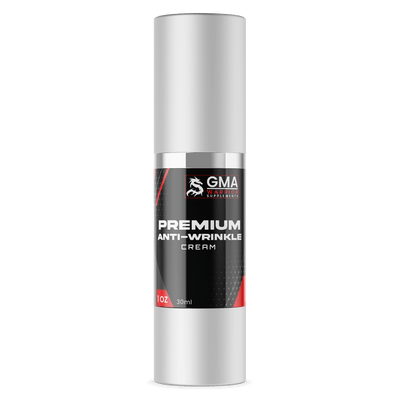
GMA Warrior Premium Anti-Wrinkle Cream — an antioxidant-rich, USA-made formula with aloe vera, ginseng, and carrot extracts that supports firmer, more radiant-looking skin and pairs naturally with a dedicated eye cream.
Shop Premium Anti-Wrinkle Cream →How to Choose an Anti-Wrinkle Eye Cream
Once you know the ingredients, choosing comes down to matching the formula to your skin and your goal. If your main concern is fine lines and you have resilient skin, look for an eye cream built around retinol — ideally with hyaluronic acid alongside it to offset dryness. If your skin is sensitive or reactive, or you're nursing or pregnant and avoiding retinoids, a peptide formula is the better-tolerated path to firmer-looking skin. For puffiness and tired-looking eyes in the morning, a lightweight caffeine formula does more than a heavy night cream would.
A few practical label cues: vitamin C and retinol both degrade in light and air, so favor opaque or air-restrictive packaging. Watch the ingredient order — an active listed near the very end is likely present in a token amount. And be realistic about price. The 2024 review found the evidence tracks the ingredient, not the prestige of the brand, so a well-formulated drugstore eye cream can match a luxury one. For the bigger picture of how these actives fit together across your whole face, see our guide to building an anti-wrinkle skin care routine.

How to Apply Eye Cream the Right Way
Application matters more than people think, because the wrong technique can tug and stress the very skin you're trying to protect. Use your ring finger — it's the weakest, so it applies the gentlest pressure. Take a pea-sized amount, dot it along the orbital bone from the inner corner outward, and pat it in gently rather than rubbing or dragging. Stay on the bone, not right up against the lash line, so the product doesn't migrate into your eyes.
On order: eye cream is usually light, so it goes on before your heavier moisturizer, and in the morning, always before sunscreen. Sun protection is non-negotiable here — ultraviolet exposure is a leading driver of the visible aging an eye cream is trying to soften, and no active reverses what daily UV keeps adding. If you're using a retinol eye cream, apply it at night and start two or three times a week, building up as your skin adjusts. To understand how retinol behaves when you first start, our breakdown of before and after retinol results walks through the timeline.
Realistic Results and Common Mistakes
Skincare runs on a biological clock, not a marketing one. Hydration-related improvements — smoother-looking skin and softer dehydration lines — can show up within days. Changes tied to collagen, like the look of set-in fine lines and crow's feet, build slowly; most clinical studies on these ingredients measure results over roughly four to twelve weeks of consistent use. If a product promises to erase wrinkles overnight, that's the marketing talking.
The most common mistakes are simple. Quitting too early, before an ingredient has had time to work. Using too much product, which wastes it and can irritate thin skin. Skipping sunscreen, which undoes the effort. And expecting an eye cream to fix concerns it can't — deep structural wrinkles, hollowing, or true under-eye darkness from pigment or anatomy often need a dermatologist's input rather than a cream. If you have a skin condition, are pregnant or nursing, or react to a new product, stop and check with your healthcare provider or a dermatologist before continuing. That's the same principle we apply to everything we make: built by martial artists in Gallatin, TN with more than 50 years of coaching behind us, the GMA Warrior standard is do the work, respect the process, and don't fall for shortcuts.

Sources & Research
- Ahmed IA, et al. "A review of the efficacy of popular eye cream ingredients." International Journal of Women's Dermatology, 2024;10(2):e152. ncbi.nlm.nih.gov
- Lupo MP, et al. "Double-blind, Randomized Trial on the Effectiveness of Acetylhexapeptide-3 Cream and Palmitoyl Pentapeptide-4 Cream for Crow's Feet." J Clin Aesthet Dermatol. ncbi.nlm.nih.gov
- Fu JJ, et al. "A randomized, controlled comparative study of the wrinkle reduction benefits of a cosmetic niacinamide/peptide/retinyl propionate product regimen vs. a prescription 0.02% tretinoin product regimen." British Journal of Dermatology. ncbi.nlm.nih.gov
- American Academy of Dermatology. "Retinoid or retinol?" aad.org