A peptide serum is sold as the gentle alternative to retinol: short chains of amino acids that "signal" your skin to rebuild. Some of that holds up in trials. A lot of it was measured by the companies that make the peptides, on a few dozen people, for a month or two. And when the FDA's own lab tested how far the best-known peptide gets into human skin, almost none of it made it past the surface.
Here is what the research supports, where peptides fit in a routine, and an honest read on the peptides in our own creams.
What a Peptide Serum Actually Contains
Peptides are fragments of proteins, usually 2 to 10 amino acids long. A 2009 review in the International Journal of Cosmetic Science by Gorouhi and Maibach at UC San Francisco sorted the cosmetic ones into four groups:
- Signal peptides are designed to prompt collagen production. Palmitoyl pentapeptide-4 (pal-KTTKS) is the best-known.
- Neurotransmitter-inhibitor peptides are designed to dampen the nerve signal behind expression lines. Acetyl hexapeptide-8, sold as Argireline, is the famous one.
- Carrier peptides deliver a trace mineral to the skin. GHK paired with copper is the classic example.
- Enzyme-inhibitor peptides are designed to slow the breakdown of existing collagen.
One distinction saves people money. A peptide you put on your skin is not the same thing as the collagen peptides you stir into coffee. Those are digested like any other protein, and whether they help your skin is a separate question. We covered it in collagen supplements for skin.

What the Peptide Trials Show
The positive results are real, and they are small in scale.
Argireline. The original 2002 study came from the team that designed the molecule. A cream containing 10% of the peptide reduced wrinkle depth by up to 30% over 30 days in healthy women. In a 2013 randomized, placebo-controlled trial in the American Journal of Clinical Dermatology, 60 Chinese adults applied argireline or placebo around the eyes twice a day for four weeks. In the subjective assessment, 48.9% of the argireline group improved against 0% on placebo, and silicone skin replicas showed less roughness.
Pal-KTTKS. Procter & Gamble scientists ran a 12-week, double-blind, split-face trial in 93 women aged 35 to 55. The same moisturizer went on both sides of the face, one with 3 parts per million of the peptide and one without. The peptide side showed significantly more improvement in fine lines and wrinkles on image analysis and expert grading.
Tripeptide-10 citrulline. This one was built by a peptide maker to mimic decorin, a protein that keeps collagen fibers orderly, and that work was done in lab dishes. The one human trial we found randomized 24 volunteers into four groups for 60 days. That is about six people per arm, which is too small to settle anything.
The honest summary comes from a 2019 systematic review of peptides that stimulate collagen and the matrix around it. It found 15 clinical studies. Only 6 used a placebo, only 5 were double-blind, and 9 enrolled women only. The authors called the literature "sparse" with "many methodological limitations." Compare that with sunscreen, which has a four-and-a-half-year randomized trial behind it, or retinoids, with dozens.
The Penetration Problem
Skin is built to keep large molecules out. Dermatologists Bos and Meinardi set out the "500 Dalton rule" in 2000: compounds much heavier than 500 daltons do not reliably cross the outer layer. Argireline weighs about 890. Most signal peptides are in the same range. GHK, at about 340, is one of the few that clears the bar.
The FDA tested it directly. Scientists at its cosmetics safety lab applied a 10% acetyl hexapeptide-8 cream to human skin for 24 hours. Most of it washed off the surface. About 0.22% of the dose was found in the stratum corneum, 0.01% in the living epidermis, and none in the dermis. Expression lines come from muscle, which sits below the dermis, so "Botox in a bottle" is not what is happening. Whatever these peptides do, they do near the surface.
That does not make the trial results fake. It means the effect is probably smaller and more superficial than the marketing suggests, and a longer contact time (a leave-on serum or cream, not a wash-off) is the only format worth buying.
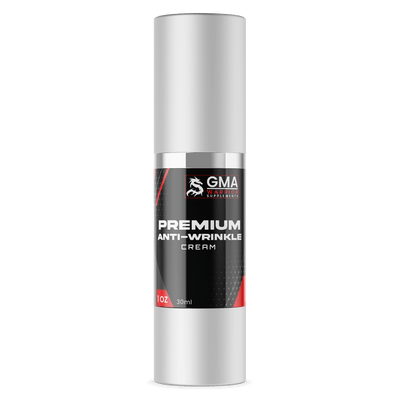
GMA Warrior Premium Anti-Wrinkle Cream. It is a cream rather than a serum, and its ingredient label lists three peptides: acetyl hexapeptide-8, tripeptide-10 citrulline and tripeptide-1. The label does not print percentages, so we can't tell you it matches the 10% used in the argireline trials.
Shop Premium Anti-Wrinkle Cream →Where a Peptide Serum Fits in Your Routine
Treat peptides as a supporting layer, not the foundation. In order of evidence:
- Morning: broad-spectrum SPF 30 or higher. Nothing in this article outranks it.
- Night: a retinoid if your skin tolerates one. Our guide to using retinol without irritation covers the ramp-up.
- Peptide serum: after cleansing, before moisturizer, morning or night. Peptides are generally well tolerated, so they are a reasonable choice on nights off retinol or for skin that can't handle one yet.
- Moisturizer last, on skin that is still slightly damp.
Peptides also sit well alongside the other gentle actives. A hyaluronic acid serum handles hydration and a niacinamide serum handles barrier and tone. You don't need all three. Our anti-wrinkle serum guide ranks the actives against each other.
Give any peptide product at least 8 to 12 weeks, the length of the better trials, before you judge it. Fifty years of teaching martial arts has taught us that this is where most people fail, with skin as with training: they switch programs before the first one has had time to work.

An Honest Read on Our Own Label
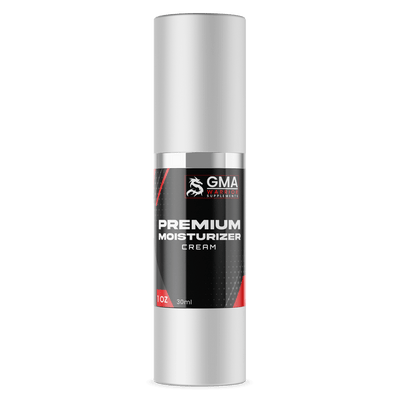
GMA doesn't sell a standalone peptide serum. We do sell two creams in our premium skin care range, and when we read the ingredient labels for this article, both listed the same three peptides. Our product pages don't mention them. That is an oversight on our side, and we have flagged it for correction.
- Acetyl hexapeptide-8 is the argireline peptide from the trials above.
- Tripeptide-10 citrulline is the decorin-mimic, with lab data and one small human trial.
- Tripeptide-1 is GHK. Most of the skin research is on GHK bound to copper. Our label lists the peptide without the copper, so that research doesn't transfer directly.
What the label can't tell you is how much is in the jar. FDA rules let a label list ingredients above 1% in descending order, then everything at 1% or below in any order. So the peptides' position alone doesn't reveal their concentration, and we won't claim a dose we can't show you. The Premium Moisturizer Cream carries the same three.
Two practical notes from the same label. Both creams contain hydrolyzed wheat and soy protein. They also contain diazolidinyl urea, a preservative that some people react to. If you have a known wheat or soy allergy or sensitive skin, patch-test on your inner arm for a few days first, and talk to your dermatologist if you have a skin condition.

Sources & Research
- Gorouhi F, Maibach HI. "Role of topical peptides in preventing or treating aged skin." International Journal of Cosmetic Science, 2009;31(5):327–345. PMID 19570099
- Blanes-Mira C, Clemente J, Jodas G, et al. "A synthetic hexapeptide (Argireline) with antiwrinkle activity." International Journal of Cosmetic Science, 2002;24(5):303–310. PMID 18498523
- Wang Y, Wang M, Xiao S, et al. "The anti-wrinkle efficacy of argireline, a synthetic hexapeptide, in Chinese subjects: a randomized, placebo-controlled study." American Journal of Clinical Dermatology, 2013;14(2):147–153. PMID 23417317
- Robinson LR, Fitzgerald NC, Doughty DG, et al. "Topical palmitoyl pentapeptide provides improvement in photoaged human facial skin." International Journal of Cosmetic Science, 2005;27(3):155–160. PMID 18492182
- Puig A, Antón JM, Mangues M. "A new decorin-like tetrapeptide for optimal organization of collagen fibres." International Journal of Cosmetic Science, 2008;30(2):97–104. PMID 18377618
- Raikou V, Varvaresou A, Panderi I, Papageorgiou E. "The efficacy study of the combination of tripeptide-10-citrulline and acetyl hexapeptide-3. A prospective, randomized controlled study." Journal of Cosmetic Dermatology, 2017;16(2):271–278. PMID 28150423
- Michalek IM, Lelen-Kaminska K, Caetano Dos Santos FL. "Peptides stimulating synthesis of extracellular matrix used in anti-ageing cosmetics: Are they clinically tested? A systematic review of the literature." Australasian Journal of Dermatology, 2019;60(4):e267–e271. PMID 30941744
- Bos JD, Meinardi MM. "The 500 Dalton rule for the skin penetration of chemical compounds and drugs." Experimental Dermatology, 2000;9(3):165–169. PMID 10839713
- Kraeling ME, Zhou W, Wang P, Ogunsola OA. "In vitro skin penetration of acetyl hexapeptide-8 from a cosmetic formulation." Cutaneous and Ocular Toxicology, 2015;34(1):46–52. PMID 24754410
- Pickart L, Margolina A. "Regenerative and Protective Actions of the GHK-Cu Peptide in the Light of the New Gene Data." International Journal of Molecular Sciences, 2018;19(7):1987. PMID 29986520
- U.S. Food and Drug Administration. 21 CFR 701.3, "Designation of ingredients" (cosmetic ingredient order). ecfr.gov