Retinol is the most proven anti-aging ingredient you can buy without a prescription — and also the one people quit fastest. The reason is almost never the retinol itself. It's how they start. Learning how to use retinol the right way is the difference between smoother, firmer skin in a few months and a red, flaking face that sends the bottle to the back of the drawer by week two.
The good news: the irritation that scares most beginners off is preventable. It comes down to three things — going slow, buffering with moisturizer, and protecting your skin from the sun. Get those right and your skin adapts. Here's the step-by-step approach dermatologists actually recommend.
Start Low and Slow — The Frequency Ramp
The single biggest mistake is treating retinol like a nightly product from day one. Your skin needs time to build tolerance, and rushing it is what triggers the peeling and redness. Begin with a lower concentration and apply it just two nights a week, then increase frequency only as your skin allows.
A practical ramp that works for most people looks like this: apply it twice a week for the first two weeks, move to every other night in weeks three and four, and build toward nightly use somewhere around weeks five to eight — but only if your skin is comfortable. If a given week feels too aggressive, hold at that frequency longer. There's no prize for reaching nightly use fast. It's the same low-and-slow discipline we teach white belts on the mats: consistency beats intensity, and the people who pace themselves are the ones still training a year later.
Apply retinol to dry skin at night. Cleanse, wait until your face is fully dry (damp skin drives the product in harder and increases irritation), then use a pea-sized amount for your entire face. More is not better — a larger dose won't work faster, it'll just irritate more.

The Sandwich Method — Buffering With Moisturizer
If your skin runs dry or sensitive, the sandwich method is the gentlest way to introduce retinol. It's exactly what it sounds like: apply a layer of moisturizer first, wait a few minutes, apply your retinol, then seal everything with a second layer of moisturizer. The moisturizer acts as a buffer, slowing how quickly the retinol penetrates and giving your barrier a cushion while it adapts.
This isn't a compromise on results — it's a smarter on-ramp. Clinical formulations that pair retinol with strong moisturization consistently show better tolerability, and the hydration itself supports the barrier that retinol temporarily disrupts. Once your skin is comfortable at nightly use, you can move to a single moisturizer layer after the retinol if you prefer. A well-formulated moisturizer with soothing botanicals also helps here, which is where a dedicated barrier-support cream earns its place in the routine.
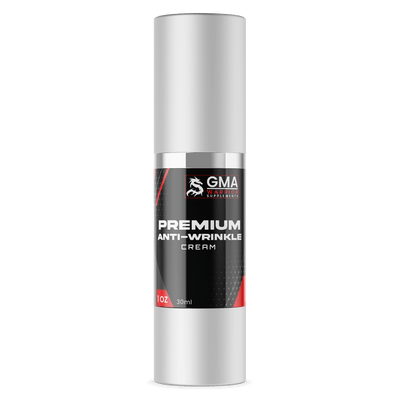
GMA Warrior Premium Anti-Wrinkle Cream — a rich, aloe- and ginseng-based moisturizer that's ideal for the "sandwich" buffer layers, keeping your barrier calm while your skin learns to tolerate retinol.
Shop Premium Anti-Wrinkle Cream →What Retinization Really Is (and How Long It Lasts)
Around weeks two to six, many people hit a rough patch — dryness, flaking, mild redness, sometimes small breakouts. Dermatologists call this retinization. It happens because retinol speeds up your skin's natural cell turnover, and while your barrier catches up to that faster pace, it briefly gets drier and more reactive. It is not an allergic reaction and it is not a sign the product is "too strong" for you by default — it's the adjustment period.
For most people retinization settles within four to eight weeks, and the skin underneath looks noticeably better than baseline once it does. The way through it is patience, not force: keep the frequency low, lean on moisturizer, and don't layer other actives (like exfoliating acids or benzoyl peroxide) on retinol nights while your skin is adjusting. If your skin is genuinely inflamed, back off to fewer nights per week rather than quitting entirely. For a realistic week-by-week picture of what changes and when, see our guide to before and after retinol results.

The Non-Negotiable: Daily Sunscreen
Retinol makes your skin more sensitive to the sun, which is why it's a nighttime-only ingredient and why daily sunscreen isn't optional while you use it. Skipping SPF during the day doesn't just risk a burn — UV exposure actively works against the collagen support and tone improvements you're using retinol to build in the first place. Apply a broad-spectrum sunscreen every morning, and if your skin is sensitive, a mineral formula with zinc oxide or titanium dioxide tends to be the most forgiving.
It's also worth being deliberate about the rest of your routine. On retinol nights, keep the supporting cast simple — a gentle cleanser, your retinol, and moisturizer. Save vitamin C, exfoliating acids, and other strong actives for mornings or alternate nights until your skin is fully adapted. If you're building a broader anti-aging routine, our breakdown of what belongs in an effective anti wrinkle serum covers how the ingredients fit together. You'll find retinol anchors the whole premium skin care lineup for a reason.
When to Adjust or See a Professional
Some tightness, flaking, and mild redness in the first several weeks is normal. What isn't normal is skin that keeps getting worse past six weeks, or reactions like intense stinging, swelling, or persistent raw patches — those are signs to stop and check in with a board-certified dermatologist, who may suggest a lower strength or a gentler retinoid alternative. If you're pregnant, nursing, planning to become pregnant, or using prescription retinoids or other skin medications, talk to your healthcare provider before starting any retinol, since topical vitamin-A products aren't appropriate for everyone.
Used correctly, though, retinol rewards patience like almost nothing else in skincare. Start slow, buffer with moisturizer, wear your sunscreen, and give it a few months. The skin you're building is worth the ramp.

Sources & Research
- American Academy of Dermatology. "Retinoid or Retinol?" — application, frequency, and sun-protection guidance. aad.org
- Kong R, et al. "Molecular basis of retinol anti-aging properties in naturally aged human skin in vivo." PMC, 2016. ncbi.nlm.nih.gov
- Milosheska D, Roškar R. "Cosmetic Retinoid Use in Photoaged Skin: A Review of the Compounds, Their Use and Mechanisms of Action." Dermatol Ther (Heidelb), 2025. pmc.ncbi.nlm.nih.gov
- "Topical Tretinoin for Treating Photoaging: A Systematic Review of Randomized Controlled Trials." PMC, 2022 — safety, tolerability, and common side effects. pmc.ncbi.nlm.nih.gov