Building an effective anti wrinkle skin care routine doesn't require a cabinet full of expensive products or a degree in dermatology. What it does require is the right ingredients, applied in the right order, at the right stage of life. Whether you're in your twenties trying to get ahead of fine lines or in your fifties working to restore firmness, the science points to a handful of proven actives that do the heavy lifting — and a lot of trendy extras that don't.
At GMA Warrior Supplements, we approach skin care the same way we approach training: cut the noise, stick with what the research supports, and stay consistent. This guide breaks down exactly what belongs in your anti-wrinkle routine by decade, which ingredients have real clinical backing, and how to build a simple daily protocol that actually delivers results.
Why Your Skin Wrinkles — and What You Can Control
Wrinkles form through two distinct processes. Intrinsic aging is the slow, genetically programmed decline of collagen and elastin production that starts in your mid-twenties. Your body produces roughly 1% less collagen per year after age 20, and the elastin fibers that give skin its snap-back quality gradually degrade. Extrinsic aging — driven primarily by UV exposure, pollution, and lifestyle factors — accelerates that timeline dramatically.
Here's the good news: extrinsic aging is largely preventable, and both types respond to targeted topical care. A 2006 review published in Clinical Interventions in Aging confirmed that topical retinoids can stimulate new collagen formation and reduce the appearance of fine lines and wrinkles by improving skin texture and increasing both epidermal and dermal thickness. Sun protection alone can slow visible aging by years. Combined with the right actives, a straightforward routine can meaningfully change how your skin ages.

The Five Anti-Wrinkle Ingredients That Actually Work
Walk into any beauty aisle and you'll see hundreds of anti-aging claims. The clinical evidence, however, narrows the field to a handful of ingredients with real, repeatable results. These are the actives worth building your routine around.
Retinol (Vitamin A)
Retinol is the gold standard in anti-wrinkle skin care. It accelerates cell turnover, stimulates collagen production, and reduces the depth of fine lines over time. A comprehensive review in the International Journal of Cosmetic Science found that retinol produces significant improvements in skin texture, fine lines, and overall photodamage. Start with a low concentration (0.25-0.5%) and build tolerance gradually — most people can work up to nightly use over 4-6 weeks.
Vitamin C (L-Ascorbic Acid)
Vitamin C is a potent antioxidant that neutralizes free radicals from UV exposure and environmental pollution. Beyond protection, it actively supports collagen synthesis. Research published in Nutrients confirmed that skin contains high concentrations of vitamin C that serve as a cofactor for collagen-stabilizing enzymes — and that topical application can replenish depleted levels, especially in sun-damaged skin. Look for serums with 10-20% L-ascorbic acid for best results.
Niacinamide (Vitamin B3)
Niacinamide strengthens the skin barrier, reduces redness, and improves fine line appearance without the irritation that retinol sometimes causes. A controlled comparative study published in the British Journal of Dermatology found that a niacinamide and peptide regimen produced wrinkle reduction comparable to prescription-strength tretinoin — with significantly better tolerability. This makes niacinamide an excellent option for sensitive skin or as a complement to retinol on alternating nights.
Peptides
Peptides are short chains of amino acids that signal your skin to ramp up collagen production. Signal peptides stimulate fibroblast activity; neurotransmitter-inhibiting peptides help relax expression lines. While peptides alone won't replace retinol, they layer well with other actives and add measurable improvement when used consistently.
SPF (Daily Sunscreen)
No anti-wrinkle routine works without sun protection. UV radiation is responsible for up to 80% of visible facial aging. A broad-spectrum SPF 30 or higher, applied every morning and reapplied every two hours during extended exposure, is the single most effective anti-aging step you can take. Everything else in your routine is damage repair — this is damage prevention.
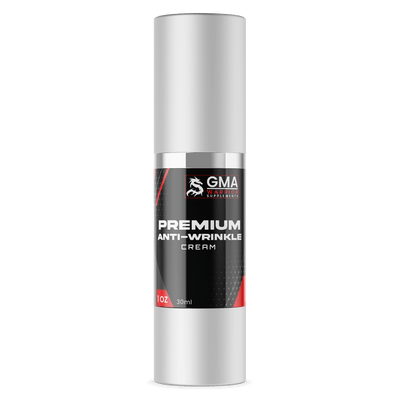
GMA Warrior Premium Anti-Wrinkle Cream — formulated with aloe vera and ginseng to help support skin hydration and reduce the appearance of fine lines. A clean, no-filler addition to your nightly anti-wrinkle routine.
Shop Anti-Wrinkle Cream →Your Anti-Wrinkle Routine by Decade
Your skin's needs change as you age, and your routine should adapt with it. Here's a research-backed framework for what to prioritize at each stage.
In Your 20s: Prevention First
Your twenties are about building habits, not fighting visible damage. Focus on daily SPF 30+, a gentle cleanser, and a vitamin C serum in the morning for antioxidant protection. A basic moisturizer rounds out the routine. Retinol isn't necessary yet for most people, but introducing it at 0.25% once or twice a week in your late twenties gives your skin a head start on collagen maintenance.
In Your 30s: Active Defense
Collagen loss accelerates noticeably in your thirties. This is the decade to add retinol as a regular part of your evening routine, working up to every other night or nightly depending on tolerance. Keep your morning vitamin C and SPF. Add a hydrating serum with hyaluronic acid if you're noticing early dryness — your skin's natural hyaluronic acid production starts declining around age 30.
In Your 40s and 50s: Restore and Repair
By your forties, you're dealing with deeper lines, loss of firmness, and uneven texture. This is where a full anti wrinkle skin care routine makes the biggest visible difference. Use retinol nightly (or consider asking your dermatologist about prescription-strength tretinoin), layer peptide serums to support collagen from multiple pathways, and switch to a richer moisturizer. Niacinamide becomes particularly valuable here for barrier repair and reducing age-related redness. Eye cream with peptides addresses the thinner skin around the orbital area.
60s and Beyond: Nourish and Protect
Skin becomes thinner and more fragile. Prioritize gentle formulations, deep hydration, and continued sun protection. Retinol may need to be dialed back to 2-3 times per week if sensitivity increases. Focus on barrier-supporting ingredients — ceramides, squalane, and niacinamide — alongside your anti-wrinkle actives. Consistency still matters more than intensity at any age.

Morning vs. Evening: How to Layer Your Products
The order you apply products matters as much as the products themselves. Here's the layering sequence that maximizes absorption and minimizes ingredient conflicts.
Morning routine: Cleanser → Vitamin C serum (wait 1-2 minutes to absorb) → Niacinamide serum (optional, if not using at night) → Moisturizer → SPF 30+ sunscreen. Vitamin C works best in the morning because it provides antioxidant protection against daytime UV and pollution exposure.
Evening routine: Cleanser (double cleanse if wearing SPF or makeup) → Retinol (on dry skin, start with pea-sized amount) → Peptide serum or niacinamide → Moisturizer or night cream. Retinol is photosensitive and should only be used at night. Apply it to dry skin — wet skin increases absorption and can cause irritation in the early weeks.
One rule applies at every age: thinnest to thickest. Serums go on before creams. Water-based formulas go on before oil-based ones. If a product can't penetrate through a thicker layer above it, you're wasting it.
Common Anti-Wrinkle Mistakes to Avoid
A solid routine can be undermined by a few common missteps. Watch for these:
Using retinol and vitamin C at the same time. Both are effective, but layering them in the same application can cause irritation without improving results. Split them — vitamin C in the morning, retinol at night. This also gives each active its optimal pH environment.
Skipping SPF on cloudy days. Up to 80% of UV rays penetrate cloud cover. If you're investing in anti-wrinkle actives at night and not protecting your skin during the day, you're undoing the work.
Starting too many actives at once. Introducing retinol, vitamin C, and chemical exfoliants in the same week is a recipe for irritation and barrier damage. Add one new active every 2-3 weeks and give your skin time to adjust.
Expecting overnight results. Retinol takes 8-12 weeks of consistent use to show meaningful wrinkle reduction. Vitamin C shows visible brightening effects in 4-6 weeks. Skin cell turnover takes roughly 28 days, so any topical active needs at least one full cycle before you judge it.
Skin care follows the same principle we teach in our training programs at GMA — 50 years of coaching has shown us that consistency and discipline always beat shortcuts. Whether it's the mats or your medicine cabinet, sustainable routines are what deliver real, lasting results.

Supporting Skin Health from the Inside Out
Topical products handle the outside. But skin health also depends on what's happening internally. Adequate hydration, quality sleep, and a nutrient-dense diet provide the raw materials your skin needs to repair and regenerate.
Collagen supplements have shown promise in clinical settings for supporting skin elasticity, though the research is still maturing. Antioxidant-rich foods — berries, leafy greens, citrus — supply the vitamin C your body uses as a collagen-synthesis cofactor. And gut health plays a larger role than most people realize: emerging research on the gut-skin axis suggests that a balanced microbiome supports skin barrier function and reduces inflammatory skin conditions. If you're curious about that connection, our guide to probiotics for gut health covers the basics.
Browse our full premium skin care collection to find products that complement your routine with clean, lab-tested formulations.
Sources & Research
- Mukherjee, S., et al. "Retinoids in the treatment of skin aging: an overview of clinical efficacy and safety." Clinical Interventions in Aging, 2006. PMC2699641
- Pullar, J.M., et al. "The Roles of Vitamin C in Skin Health." Nutrients, 2017. PMC5579659
- Fu, J.J., et al. "A randomized, controlled comparative study of the wrinkle reduction benefits of a cosmetic niacinamide/peptide/retinyl propionate product regimen vs. a prescription 0.02% tretinoin product regimen." British Journal of Dermatology, 2010. PMC2841824
- American Academy of Dermatology. "Anti-aging skin care." aad.org