Scroll through any skincare feed and you will find dramatic before after retinol photos promising flawless skin in a few weeks. The real story is more useful, and more encouraging, than the hype. Retinol works, but it works on a biological timeline that does not care about your patience. Knowing what actually changes, and when, is the single biggest predictor of whether you stick with it long enough to see results.
We have spent 50+ years at Global Martial Arts USA teaching people that visible progress comes from consistent, unglamorous work repeated over months. Retinol is no different. This guide lays out the honest week-by-week timeline, what retinol can and cannot do for your skin, why it often looks worse before it looks better, and how to set yourself up for the best possible result.
What a Real "Before and After Retinol" Looks Like
Retinol is a vitamin A derivative, the over-the-counter cousin of prescription retinoids like tretinoin. Once it absorbs into the skin, it converts into retinoic acid, the active form that signals skin cells to renew faster and supports the skin's own collagen-building machinery. Because retinol has to convert before it goes to work, it is gentler than prescription strength, but also slower to show change.
A genuine before-and-after, photographed under the same lighting months apart, usually shows softer fine lines, smoother and more refined texture, a more even tone, and a subtle overall "polished" look. What it almost never shows is the erasure of deep, set-in wrinkles or a complete transformation in three weeks. Reviews of cosmetic retinoids describe them as the evidence-based standard for improving the appearance of photoaged skin, with the most reliable gains in fine wrinkling, texture, and pigmentation rather than deep structural folds.

The Retinol Timeline: Week by Week
The most common mistake is judging retinol by week three. That is precisely when many people quit, and precisely when the ingredient is working but the payoff has not surfaced yet. Here is a realistic map of what tends to happen.
Weeks 1 to 6: Adjustment
This is the "retinization" window, when your skin adapts to the ingredient. Expect possible dryness, light flaking, some redness, and occasionally a temporary uptick in breakouts. Texture may look uneven before it settles. This phase is normal and usually eases as the skin acclimates.
Weeks 6 to 12: First Visible Wins
Around the two-month mark, the surface-level changes start to show. Skin often looks smoother, pores appear more refined, and tone begins to even out. This is the first "before and after" most people can actually see in the mirror.
Three to Six Months and Beyond: The Real Payoff
Deeper benefits, especially the softening of fine lines, depend on collagen remodeling in the dermis, which takes time. A double-blind randomized controlled trial of a 0.3% retinol product found measurable improvement in the appearance of fine wrinkles and overall photoaging that built progressively over the study period rather than appearing overnight. Continued, consistent use over six to twelve months produces the most striking comparisons.
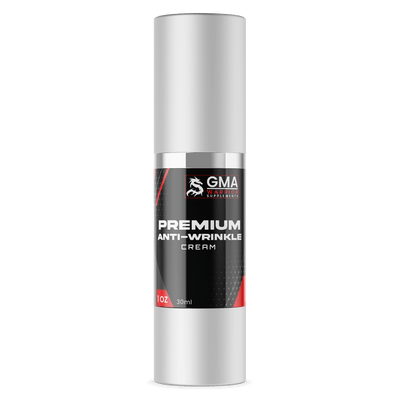
GMA Warrior Premium Anti-Wrinkle Cream — a soothing aloe, cucumber, carrot, and ginseng moisturizer that helps support your skin barrier through the dryness and flaking of the retinization phase. Pair it with your retinol nights to keep skin comfortable while it adjusts.
Shop Premium Anti-Wrinkle Cream →Retinization and the "Purge": Why Skin Gets Worse Before Better
The early rough patch has a name: retinization. As retinol speeds up cell turnover, the skin barrier is briefly more reactive, which can mean tightness, peeling, and stinging when you apply other products. Some people also experience what is popularly called a "purge," where congestion already forming under the surface comes up faster than usual. For most people this settles within the first several weeks.
This is where expectations matter most. If you understand that the adjustment phase is part of the process, you are far more likely to push through to the rewarding part. If a reaction is severe, painful, or does not calm down, that is not something to power through. Stop and consult a dermatologist or your healthcare provider, especially if you have a diagnosed skin condition, are pregnant, or are unsure whether retinol is right for you.
For a broader look at how retinoids fit alongside other proven ingredients, see our guide to building an anti-wrinkle skin care routine for every age.

What Retinol Can and Can't Do
Setting honest expectations protects you from disappointment and from quitting too early. Based on the clinical literature, here is a grounded view.
What retinol supports well: the appearance of fine lines and surface wrinkles, skin texture and smoothness, more even tone and the look of sun-related pigmentation, and overall radiance. A randomized clinical trial in patients with moderate to severe photodamage tied these visible improvements to real biological changes, including shifts in the enzymes (such as MMP-2) that influence how the skin handles its own collagen.
What retinol won't do: erase deep, structural wrinkles the way a cosmetic procedure might, deliver overnight change, or replace daily sun protection. It also is not a substitute for medical care. Retinol supports the look of healthy, renewed skin; it does not treat or cure any disease. If you are targeting a specific skin condition, that is a conversation for a dermatologist.
How to Track Your Own Before and After
Because retinol changes skin gradually, day-to-day progress is almost impossible to notice in the mirror. The fix is simple: photograph your skin and let the camera keep score for you.
Take a clear, makeup-free photo on day one, in natural light, from the same angle and distance. Then repeat it every two to four weeks under the same conditions. Lighting is the variable that ruins most home comparisons, so shoot at the same time of day, near the same window, without flash, and skip the filters and beauty modes entirely.
When you compare shots a few months apart, look for the changes retinol realistically delivers: smoother surface texture, softer fine lines around the eyes and mouth, a more even tone, and fewer rough or congested patches. Deep folds and bone-structure shadows will not move, so do not judge progress by those.
This is the same principle we use coaching athletes: you rarely feel yourself improving week to week, but the footage from two months ago does not lie. Honest tracking also keeps you from quitting during the awkward retinization phase, when your skin may briefly look worse than your starting photo even though it is on the right track.
How to Get the Best Before-and-After
The difference between a disappointing result and a genuinely impressive one usually comes down to technique and consistency, not the price of the product.
Start low and slow. Begin with a lower concentration, such as 0.3% retinol, two to three nights a week, and build up as your skin tolerates it. Research comparing strengths found that 0.3% retinol was better tolerated than 1%, with fewer and milder side effects, which makes it easier to stay consistent.
Use a pea-size amount at night. More product does not mean faster results; it mostly means more irritation. Apply to clean, dry skin, and if you are new to it, buffer with moisturizer first or "sandwich" the retinol between two thin layers of moisturizer.
Protect your work with sunscreen. Retinol can increase sun sensitivity, and unprotected UV exposure undoes the very photoaging improvements you are working toward. Daily broad-spectrum SPF is non-negotiable if you want a real before-and-after. Pairing retinoids with antioxidants is also a well-supported strategy; our breakdown of anti-wrinkle serum science covers how vitamin C and peptides complement a retinol routine.
Be consistent, then be patient. Three to four nights a week, every week, beats an aggressive start followed by quitting in frustration. The before-and-after belongs to the people who treat skincare like training: show up, repeat the basics, and let time do the work. For more options across our full lineup, browse the premium skin care collection.

Sources & Research
- Quan T, et al. "Cosmetic retinoid use in photoaged skin: A review of the compounds, their use and mechanisms of action." Journal of Cosmetic Dermatology, 2025. ncbi.nlm.nih.gov
- Bellemère G, et al. "Multifaceted amelioration of cutaneous photoageing by (0.3%) retinol." International Journal of Cosmetic Science, 2022. ncbi.nlm.nih.gov
- Kang S, et al. "Biomarkers of Tretinoin Precursors and Tretinoin Efficacy in Patients With Moderate to Severe Facial Photodamage: A Randomized Clinical Trial." JAMA Dermatology, 2022. ncbi.nlm.nih.gov
- Watson REB, et al. "A cosmetic 'anti-ageing' product improves photoaged skin: a double-blind, randomized controlled trial." British Journal of Dermatology, 2009. ncbi.nlm.nih.gov